Padel & Pickleball Courts
in Florida
Planning a padel or pickleball court in Florida? Apex Padel supplies premium European padel court systems and supports commercial pickleball developments throughout the state. We help racquet clubs, hospitality businesses, property developers and private clients...
Premium Courts.
Built for Florida.
Planning a padel or pickleball court in Florida? Apex Padel supplies premium European padel court systems and supports commercial pickleball developments throughout the state. We help racquet clubs, hospitality businesses, property developers and private clients compare court options, assess construction requirements and coordinate projects with appropriate technical and installation professionals.
Florida provides opportunities for commercial racquet sports facilities, resort amenities, residential courts and suitable conversions of existing recreational properties. However, hurricane wind requirements, intense rainfall, heat and coastal exposure can significantly influence the design. Apex helps clients select equipment around the actual site rather than assuming one court specification is suitable statewide.
Explore Our Court Systems
Premium courts for commercial and private developments.
Padel & Pickleball in Florida
Florida has established padel and pickleball communities across several metropolitan areas. Miami and South Florida already support dedicated padel clubs, while Orlando, Tampa and Boca Raton offer a mixture of public recreation and commercial racquet sports facilities.
The state also contains very different development environments. A commercial indoor club in Orlando may have different requirements from an exposed coastal installation near Miami or Fort Lauderdale. Residential developments, hospitality properties and existing tennis clubs introduce further considerations involving land use, customer access and supporting amenities.
Existing Padel Facilities in South Florida
Padel is already an established commercial sport in parts of South Florida. Reserve operates three glass-enclosed courts at its Miami Design District location, alongside additional clubs in the Miami area.
Boca Raton and surrounding Palm Beach County also have commercial padel facilities. These venues demonstrate that the sport is being played locally, but they also form part of the competition a new developer should research.
Established Pickleball Infrastructure
Florida municipalities already provide extensive pickleball opportunities. Miami lists courts at several city parks, Fort Lauderdale operates dedicated and shared facilities, and Tampa maintains a large network of outdoor and indoor playing areas.
Orlando Tennis Centre provides pickleball on existing hard tennis courts, while Boca Raton's Patch Reef Paddle & Racquet Club includes substantial covered pickleball facilities.
These examples illustrate different approaches to recreational court development. Public provision demonstrates participation, but commercial viability must be evaluated separately.
Commercial and Private Developments
Potential projects include dedicated padel clubs, indoor pickleball centers, hotels, resorts, residential communities, existing sports facilities and private properties.
The intended customers and operating model should influence court numbers, equipment specifications, supporting facilities and long-term maintenance arrangements.
Padel Courts in Florida
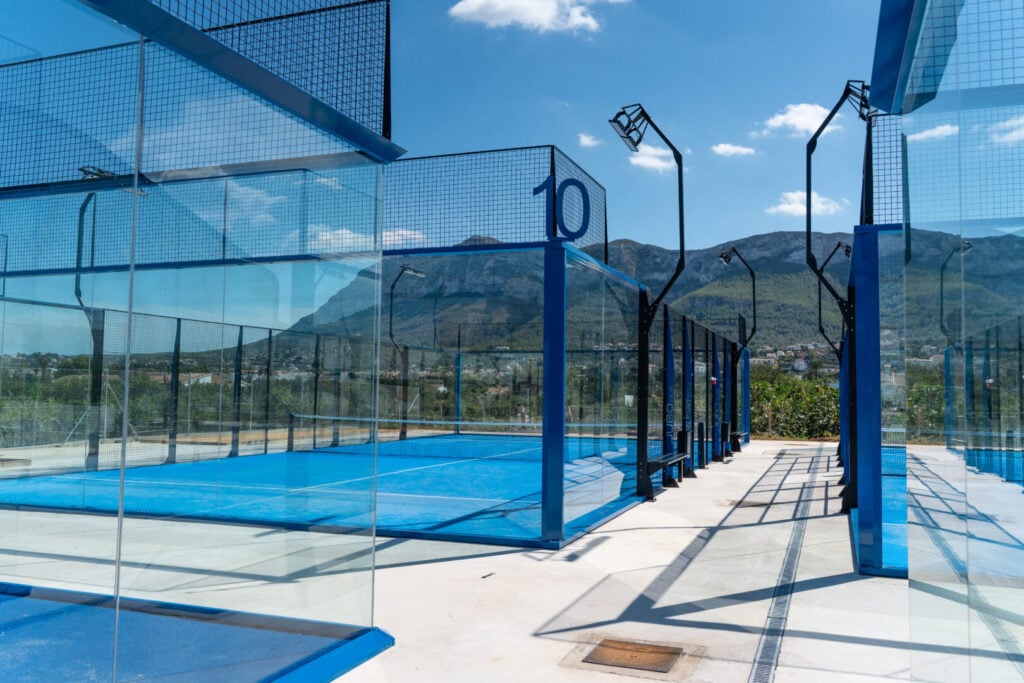
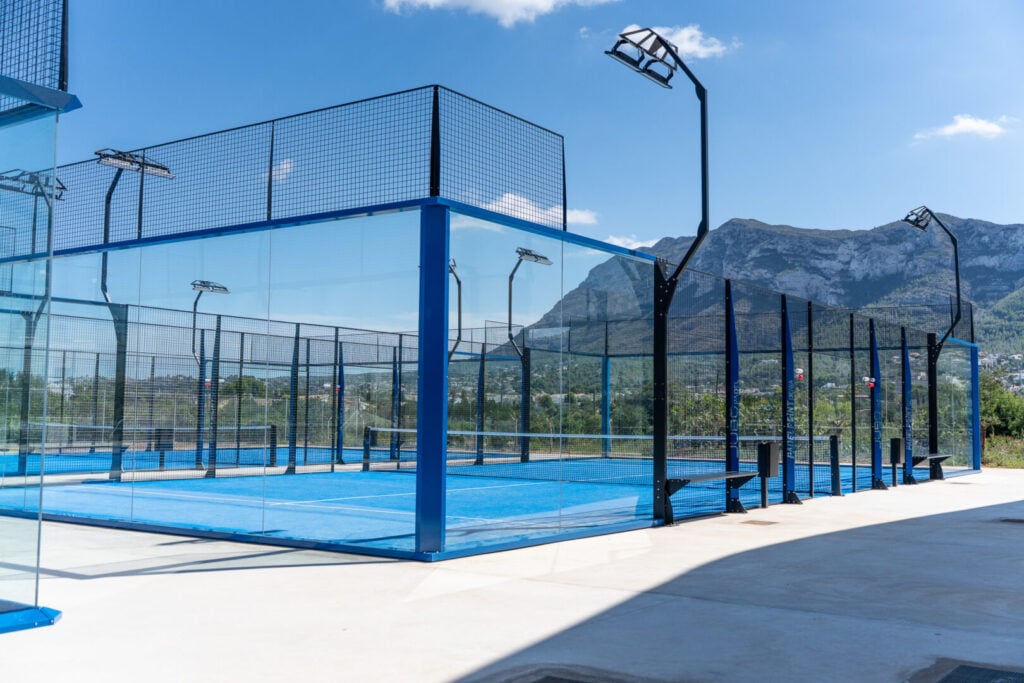
Apex supplies premium European-engineered padel courts for suitable private and commercial developments throughout Florida. Our padel court range includes panoramic, glass, indoor, covered and high-wind systems.
Outdoor Padel Court Construction
Outdoor padel courts may suit suitable commercial clubs, hospitality properties, residential developments and private sites where sufficient land and appropriate approvals are available.
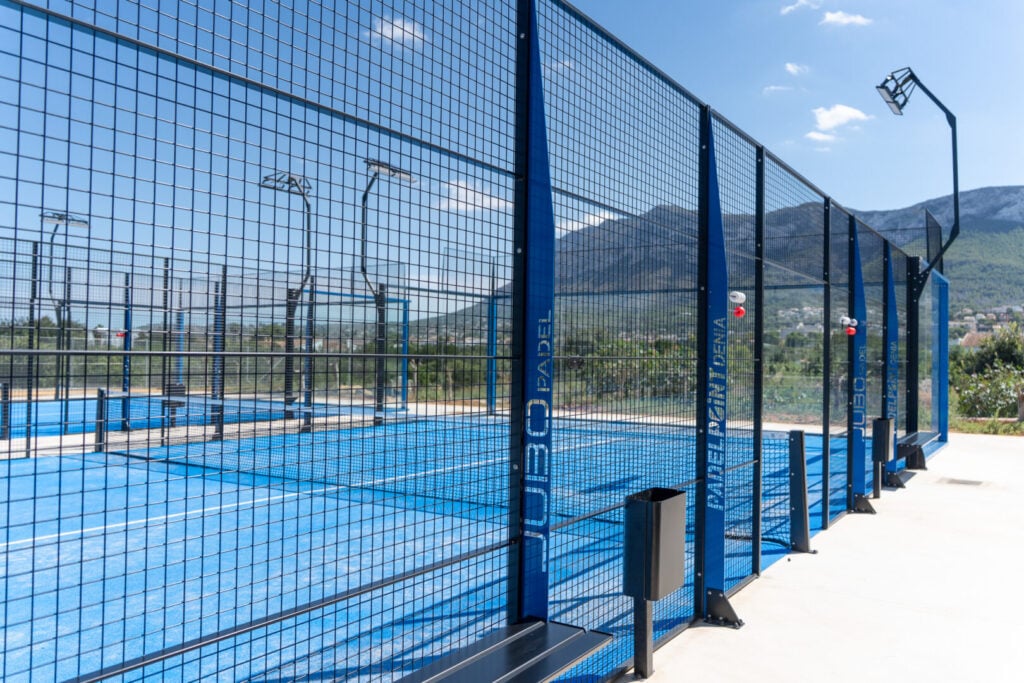
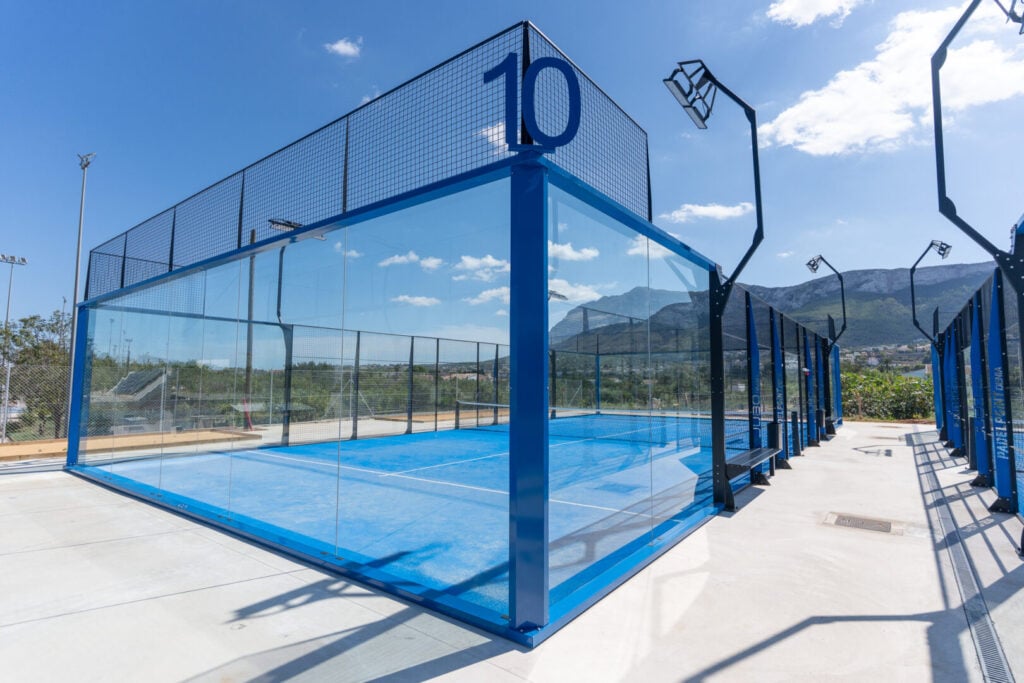
Unlike an open pickleball court, padel requires a purpose-built enclosure incorporating structural steelwork and glass. Foundations, anchoring and the complete enclosure must be engineered for the relevant environmental loads.
Florida's strong tropical storms and hurricane exposure make wind engineering particularly important. The correct specification should be established by qualified professionals for the actual property rather than relying on a general description such as hurricane-resistant.
Indoor Padel Courts
Indoor padel may appeal to operators seeking greater control over heat, humidity and weather disruption. Suitable existing sports buildings or commercial properties can offer opportunities where adequate clear height, appropriate floor conditions and suitable building services are available.
However, an existing warehouse or recreational building does not automatically provide a suitable foundation for a padel enclosure. Structural capacity, access for court components, ventilation, cooling, lighting and the proposed occupancy must be assessed before equipment is ordered.
Explore our indoor padel court systems for more information.
Covered Padel Courts
Covered padel courts can provide shelter from direct sunlight and some rainfall. However, roof structures introduce additional engineering requirements associated with wind uplift, supporting foundations and applicable building regulations.
A canopy does not provide the same temperature control as an air-conditioned building and should not be assumed suitable for hurricane conditions without detailed structural assessment.
Premium Commercial Facilities
Panoramic padel courts may suit premium clubs and hospitality developments where court appearance, spectator visibility and the playing experience are important.
The final selection should also reflect maintenance access, the intended number of courts, surrounding amenities and the long-term operating model.
Apex helps coordinate specifications with manufacturers, engineers and suitable installation professionals. Learn more about our court project process.
Pickleball Courts in Florida
Florida already has extensive public and commercial pickleball provision, ranging from shared tennis facilities to dedicated outdoor courts and indoor sports centers.
Apex supports commercial pickleball court projects, including new playing surfaces, multi-court layouts and the assessment of existing recreational facilities for potential conversion.
Purpose-Built Pickleball Facilities
A regulation pickleball court measures 20 by 44 feet. For new construction, an overall playing surface of approximately 34 by 64 feet is preferred to provide suitable clearance beyond the marked boundaries.
Commercial venues should also allow space for circulation, fencing, seating, lighting, accessibility and supporting amenities. Multi-court facilities need to be designed around safe player movement and practical operation rather than simply fitting as many courts as possible onto the site.
Florida's Outdoor Playing Environment
Outdoor pickleball is popular in suitable weather, but Florida's summer heat, humidity, thunderstorms and heavy rainfall can affect playing comfort and court availability.
Shade, drinking-water access, suitable operating hours, sports lighting and surface drainage should all form part of the design.
Covered pickleball facilities may provide additional shade and protection from some rain, but their structures require appropriate wind engineering.
Indoor Pickleball Facilities
Indoor clubs may provide greater consistency during periods of heavy rainfall or extreme heat. Existing commercial buildings sometimes offer conversion opportunities where the dimensions, flooring, ventilation and building approvals are suitable.
Operators should include cooling, acoustics, accessibility, lighting and energy consumption in their financial assessment.
Existing Tennis Court Conversions
Some existing tennis courts may be suitable for pickleball conversion where the foundations, dimensions, playing surfaces and drainage are appropriate.
Conversion may involve resurfacing, new markings, dedicated net systems and changes to fencing or access. The underlying base should be assessed before assuming it can be reused.
Noise and Residential Developments
Pickleball produces distinctive impact sounds that can be important near homes, hotels and other noise-sensitive properties.
Court orientation, screening, acoustic treatment and operating hours should be considered during planning. Applicable local requirements differ between communities and may also be affected by homeowners association rules.
Commercial Market Assessment
Florida's existing racquet sports facilities provide evidence of participation, but they do not guarantee demand for another paid venue.
Operators should assess the intended audience, existing courts, local competition, expected bookings and operating costs before committing to construction.
Our Court Options
Several padel court configurations may suit Florida developments, depending on the property and intended use.
- Panoramic padel courts: Suitable for premium racquet clubs, resorts and private properties where presentation and visibility are priorities.
- Glass padel courts: An option for commercial and private facilities seeking professional playing conditions.
- Indoor padel courts: Worth considering for suitable buildings where operators want more predictable temperature and weather conditions.
- Covered padel courts: May provide additional shade and weather protection where the supporting structure meets applicable engineering requirements.
- High-wind padel courts: May be appropriate for exposed sites following assessment of the required wind performance and complete structural design.
Matching the System to Florida's Conditions
An indoor commercial venue may prioritize court capacity and cooling, while an exposed coastal property needs greater attention to wind loads, corrosion protection and flood risk.
A private residential installation may prioritize appearance, landscaping and the relationship with nearby homes. The correct specification follows the site assessment rather than a standard recommendation for the state.
Local Construction Requirements
Hurricane Wind Engineering
Florida's hurricane exposure makes structural engineering an essential part of padel court construction. The enclosed court includes glass panels, steel framework and fixings that must remain compatible with the engineered foundations and anchoring system.
The required wind performance depends on the property's location, exposure and applicable code provisions. A supplier's general wind-resistance claim should not replace a site-specific engineering assessment.
High Velocity Hurricane Zone Requirements
Miami-Dade and Broward counties fall within Florida's High Velocity Hurricane Zone. Relevant construction must comply with the applicable provisions of the Florida Building Code and associated local requirements.
Padel court structures, covered facilities and any relevant glazing or building products should be reviewed by qualified professionals to establish whether the proposed system and documentation satisfy those requirements.
A court should not be described as compliant simply because similar equipment has been installed elsewhere in Florida.
Coastal Corrosion and Material Durability
Properties near the Atlantic Ocean and Gulf coast may experience salt-laden air, moisture and greater exposure to wind.
Outdoor court steelwork, fasteners, protective coatings and other components should be specified for the actual environment. Suitable maintenance arrangements can also influence long-term performance.
Heavy Rainfall and Drainage
Florida experiences heavy seasonal rainfall, often associated with thunderstorms and tropical weather systems. New playing surfaces can increase runoff and change how water moves across a property.
Outdoor courts need appropriate surface levels, foundations and drainage. The surrounding site's grading, existing stormwater infrastructure and nearby properties should be considered together.
High Groundwater Conditions
Some Florida properties have relatively shallow groundwater, which can affect excavation, foundation preparation and drainage.
Ground conditions vary considerably between locations. A qualified professional should determine whether geotechnical investigation, additional base preparation or special drainage arrangements are needed.
Floodplain and Coastal Development
Some coastal and low-lying Florida properties fall within FEMA Special Flood Hazard Areas. New structures, grading and other development may require floodplain review and additional construction measures.
Official mapping should be checked for the actual address. Flood risk can exist outside mapped high-risk areas, particularly during intense rainfall or tropical storms.
Florida's Coastal Construction Control Line
The Florida Department of Environmental Protection administers the Coastal Construction Control Line program for certain beachfront areas.
Construction or excavation seaward of an established control line generally requires a DEP permit unless an exemption applies. The program addresses beach and dune protection, storm hazards, nearby properties and other coastal resources.
These rules do not apply identically to every coastal property. Developers should establish the site's location relative to the mapped control line before preparing construction plans.
Environmental Resource Permits
Florida's Environmental Resource Permitting program addresses certain alterations to surface water flows, stormwater systems, wetlands and other regulated areas.
Applications may be administered by the Department of Environmental Protection, a water management district or another responsible authority under the relevant agreements.
New court paving, grading or drainage work may trigger review depending on the site's conditions and the proposed project. Not every small court requires an individual ERP, so applicability should be confirmed rather than assumed.
Construction Stormwater Permit Coverage
Florida's Construction Generic Permit generally applies where construction disturbs one acre or more, or a smaller area forming part of a larger common development, and the activity has qualifying stormwater discharges.
Projects requiring coverage must prepare a Stormwater Pollution Prevention Plan and follow the applicable notice and compliance procedures.
Smaller projects can still be subject to local drainage, grading and erosion-control requirements. The Construction Generic Permit is separate from Environmental Resource Permitting and local construction approvals.
Florida Building Code
The Florida Building Commission identifies the 8th Edition of the Florida Building Code, effective December 31, 2023, as the current adopted edition, while work on the 2026 code update continues.
Commercial sports developments may require review of structural design, foundations, occupancy, accessibility, fire safety, lighting and other applicable requirements.
The code and local amendments in effect at the time of permitting should be confirmed by the project team.
Municipal and County Zoning
Florida cities and counties administer different land-use, site-plan and development procedures. A commercial facility in Miami may face different requirements from a property in Orlando, Tampa or Boca Raton.
The correct authority should be determined using the actual property address. Developers should confirm that the intended recreational use is permitted before committing to a building or site.
Planning a Court in Florida?
Tell us about your site and the type of court you are considering. Our team can help you explore the options.
Types of Court Projects
Padel and pickleball courts can complement several types of development throughout Florida.
- Commercial padel clubs: Dedicated venues for bookings, coaching, leagues and member facilities.
- Indoor pickleball centers: Multi-court facilities designed around cooling, lighting, acoustics and year-round use.
- Hotels and resorts: Premium recreational amenities planned around guest access and the surrounding property.
- Residential communities and HOAs: Shared courts with suitable operating, maintenance and noise arrangements.
- Private properties: Individual courts where sufficient land, suitable foundations and necessary approvals are available.
- Existing racquet clubs: Additional sports or suitable adaptations of established facilities.
- Commercial developments: Purpose-built sports venues with parking, circulation and supporting amenities.
Commercial Feasibility and Competition
Several Florida markets already contain specialist padel or pickleball clubs. A proposed venue should identify how its court availability, customer experience, location or supporting services would differ from existing facilities.
Demand for padel should be researched independently from pickleball. Although both are racquet sports, the facilities, playing formats and potential audiences differ.
Long-Term Operating Considerations
Florida's climate makes court cleaning, drainage maintenance, air conditioning and weather preparation important operational considerations.
A commercial facility should evaluate both construction costs and the ongoing expense of keeping courts playable and safe.
Explore our padel court projects for examples of different court configurations.
Planning Your Court Project
Before investing in a Florida padel or pickleball project, the proposed property should be assessed for its construction requirements and intended operation.
Initial Project Planning Checklist
- Available space: Confirm court dimensions, clearances, access and supporting amenities.
- Wind engineering: Establish applicable wind loads, exposure conditions and hurricane-zone requirements.
- Foundations: Assess existing surfaces, soil conditions and structural anchoring.
- Drainage: Review rainfall runoff, groundwater and any changes caused by new paving.
- Flood risk: Check official flood mapping and relevant coastal restrictions.
- Coastal exposure: Consider corrosion protection and long-term maintenance where appropriate.
- Indoor buildings: Assess clear height, flooring, cooling, ventilation and installation access.
- Noise and lighting: Consider neighboring properties and proposed operating hours.
- Commercial access: Plan parking, circulation, accessibility and supporting services.
- Permits: Confirm zoning, building, engineering, stormwater and any environmental approvals.
Coordinating Court Supply and Construction
Apex helps clients compare court systems and coordinate technical requirements with manufacturers, engineers and suitable installation professionals.
Early coordination is particularly important where structural wind calculations, drainage or building alterations may influence the equipment specification.
Learn more about our project process.
Padel & Pickleball Court Costs
The cost of installing padel or pickleball courts in Florida depends on the equipment, proposed location and wider construction requirements.
Main Cost Considerations
- Court specification: Different padel structures and pickleball surfaces have different equipment and installation costs.
- Hurricane engineering: Site-specific wind requirements and structural documentation may affect equipment selection and foundations.
- Ground preparation: Excavation, base construction, drainage and groundwater conditions can influence the budget.
- Coastal exposure: Corrosion protection and flood-related measures may be relevant for some properties.
- Indoor facilities: Building conversions can require cooling, ventilation, lighting and occupancy improvements.
- Weather protection: Covered courts require additional engineering for the roof and supporting structure.
- Environmental approvals: Qualifying projects may need stormwater or coastal development reviews.
- Supporting facilities: Parking, fencing, accessibility, seating and player amenities should be included where appropriate.
- Professional services: Engineering, permits, delivery and installation form part of the overall investment.
Our padel court cost guide explains the main pricing considerations. For a quotation tailored to your Florida property, contact Apex Padel with details of the proposed development.
Areas We Cover
Apex welcomes initial padel and pickleball court enquiries throughout Florida, including Miami, Fort Lauderdale, Orlando, Tampa and Boca Raton.
We can also discuss projects in other parts of South Florida, Central Florida, the Gulf Coast and suitable residential or commercial developments elsewhere in the state.
Each project requires individual assessment of planning jurisdiction, environmental conditions and technical requirements. Our city pages provide more specific information about existing facilities and local construction considerations.
Contact Apex to discuss the court specification and next steps for your proposed property.
Frequently Asked Questions
Planning padel and pickleball courts in Florida.
Do padel courts in Florida need hurricane-rated engineering?
Padel courts must be designed for the wind loads and structural requirements applicable to their location. Miami-Dade and Broward counties are within Florida's High Velocity Hurricane Zone. The court enclosure, anchoring, foundations and any covered structure should be assessed together by qualified professionals. A general manufacturer claim of hurricane resistance does not replace site-specific design verification.
Are indoor padel and pickleball courts worth considering in Florida?
Indoor courts can provide greater control over heat, humidity and weather disruption. They may suit commercial sports buildings and appropriate property conversions where sufficient height, suitable flooring, ventilation and cooling can be provided. Operators should assess building and energy costs alongside the potential benefits of more predictable playing availability.
Can existing tennis courts in Florida be converted for pickleball?
Some existing tennis courts may be suitable for conversion where the dimensions, foundations, sports surface and drainage are appropriate. Conversion can involve resurfacing, markings, nets and changes to access or fencing. A professional assessment should establish whether the existing base can be reused.
Can Apex Padel coordinate court projects throughout Florida?
Apex supplies premium European padel court systems and supports commercial pickleball project planning. We help clients review specifications and coordinate with manufacturers and appropriate technical and installation professionals. Delivery and installation arrangements are established individually according to the location and project requirements.
Explore More Locations
Ready to Start Your Padel Project?
Premium court systems, clear guidance and support from initial enquiry through to project delivery.
Get a Quote