Commercial Pickleball Courts
Apex supports commercial pickleball court projects for clubs, resorts, HOAs, developers, sports facilities and private venues. From new court planning to conversions, we help clients work through the layout, specification and wider project requirements needed to create a court that fits the site and how it will be used.
Pickleball Court Construction Planned Around the Site
A good pickleball court starts with more than the playing lines. Available space, ground conditions, drainage, orientation, access, neighbouring properties and expected levels of use can all affect how a project should be planned.
A regulation pickleball court measures 20 x 44 ft, but the playing area needs considerably more room around it. A total area of 30 x 60 ft is considered the minimum recommended playing surface, while 34 x 64 ft is preferred for new construction.
Apex helps clients review the wider project brief and coordinate the court requirements with the relevant design, construction and installation teams.
Where Pickleball Courts Work Best
- Pickleball and racquet clubs: dedicated courts for memberships, coaching, leagues and social play.
- HOAs and residential communities: shared sports amenities for residents and guests.
- Hotels and resorts: additional activities that can strengthen the wider guest experience.
- Sports and leisure facilities: standalone courts or additions to existing racquet and fitness facilities.
- Developments: pickleball amenities for residential, mixed-use and hospitality projects.
- Private facilities: purpose-planned courts for estates, private clubs and premium residential projects.
New Pickleball Courts or Court Conversions?
Pickleball courts can be created as purpose-built facilities or introduced by adapting an existing hard court. The better option depends on the site, condition of the existing surface and long-term plans for the facility.
New Pickleball Court Construction
A new-build project provides more control over court orientation, base preparation, drainage, fencing, lighting and surrounding player space. It is usually the stronger option for dedicated commercial facilities or sites planning several courts.
Existing Court Conversions
Existing tennis and multi-sport courts may be suitable for conversion where the base and surface remain in appropriate condition. The project may involve resurfacing, new line layouts, nets and posts, fencing changes and alterations to the surrounding court area.
The condition of the existing court should always be assessed before deciding whether conversion or replacement offers better long-term value.
Pickleball Courts for Clubs and Commercial Facilities
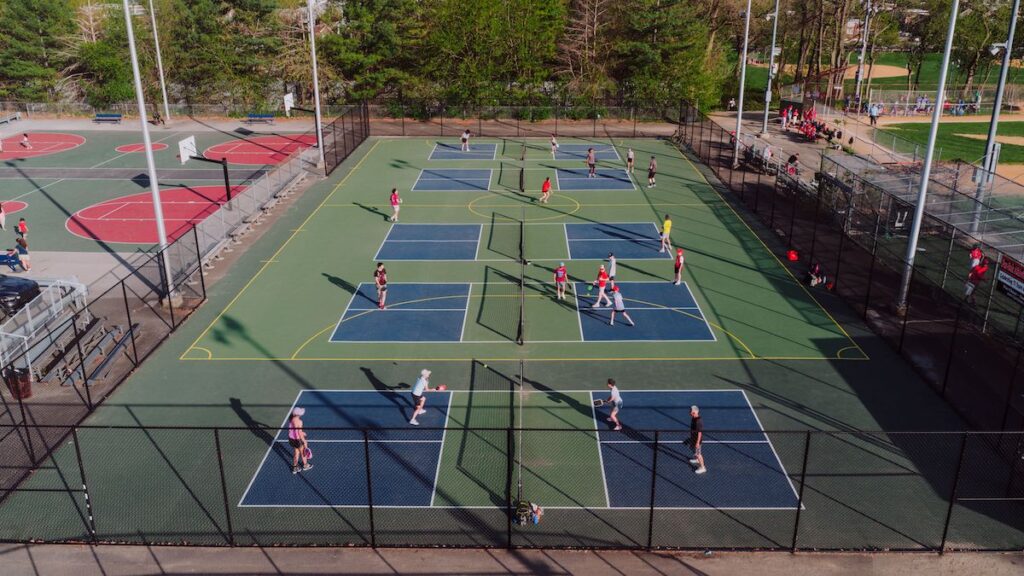
- Single and multi-court layouts
- Player access and circulation
- Court dividers and perimeter fencing
- LED lighting requirements
- Spectator and waiting areas
- Coaching and organised play
- Surface and court colour options
- Future court expansion
- Indoor, outdoor or covered environments
Technical Features
- Playing court: regulation court markings measure 20 ft wide by 44 ft long.
- Overall playing area: allow at least 30 x 60 ft, with approximately 34 x 64 ft preferred for purpose-built new courts.
- Court orientation: north-south orientation is generally preferred for outdoor courts where the site allows, helping reduce low sun directly in players’ sightlines.
- Base: asphalt or concrete can provide a suitable base when correctly designed for levels, drainage, slope and the chosen sports surface.
- Playing surface: the finished surface should provide consistent ball response, grip and predictable playing conditions.
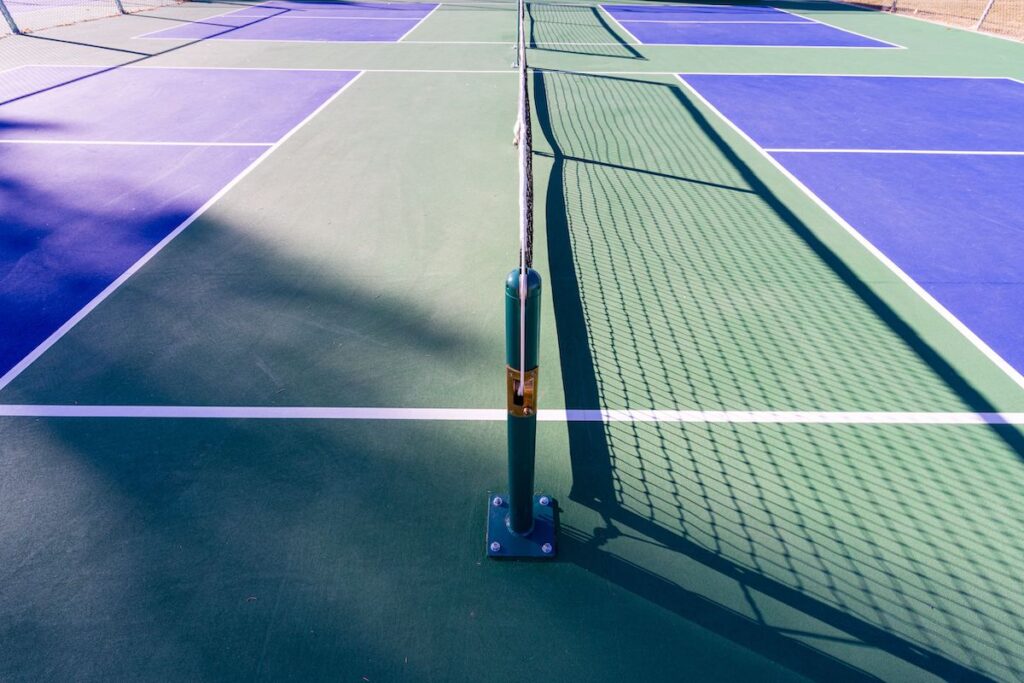
- Net system: permanent or appropriate commercial net systems can be selected according to the facility and expected use.
- Fencing and dividers: perimeter fencing and between-court separation should be considered for safety, ball containment and player flow.
- Lighting: lighting should provide clear, even visibility while limiting unnecessary glare for players and surrounding properties.
Outdoor, Indoor and Covered Pickleball Courts
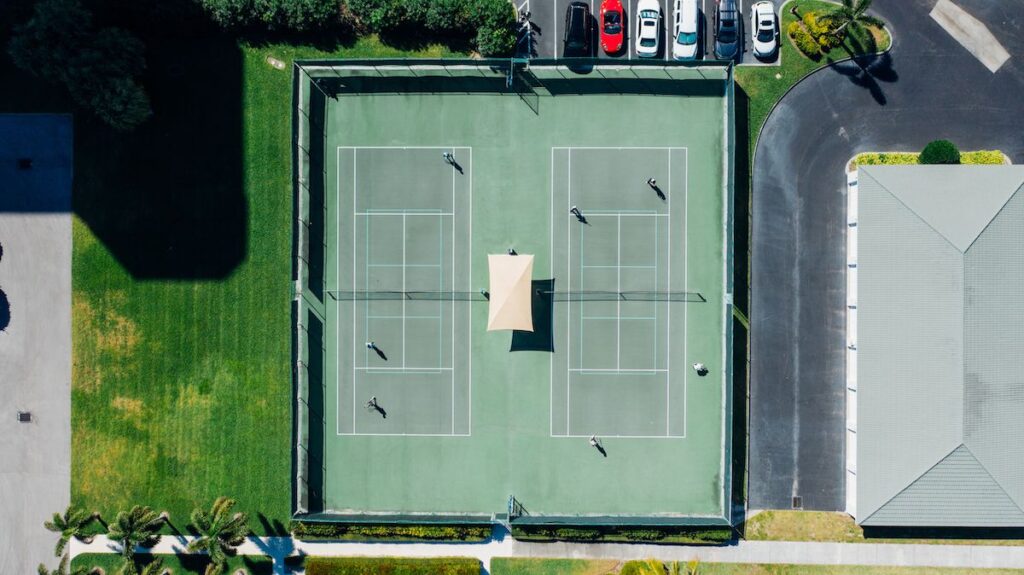
Pickleball facilities are not limited to conventional outdoor courts. The right environment depends on climate, available buildings, operating model and how consistently the courts need to remain available.
Outdoor Pickleball Courts
Outdoor courts can work well for clubs, communities, resorts and private facilities where suitable land is available. Drainage, sun orientation, lighting, weather exposure and surrounding properties all need to be considered.

Indoor Pickleball Courts
Indoor projects can provide more predictable playing conditions and reduce disruption from heat, rain and changing weather. Existing sports buildings and suitable warehouse-style spaces may also offer conversion opportunities where dimensions, access, lighting and ventilation work for the intended layout.
Covered Pickleball Courts
A covered court can provide some of the benefits of outdoor play while offering additional protection from sun and weather. Where weather protection forms part of the brief, Apex can discuss how covered court requirements fit into the wider project.
Planning Around Pickleball Noise
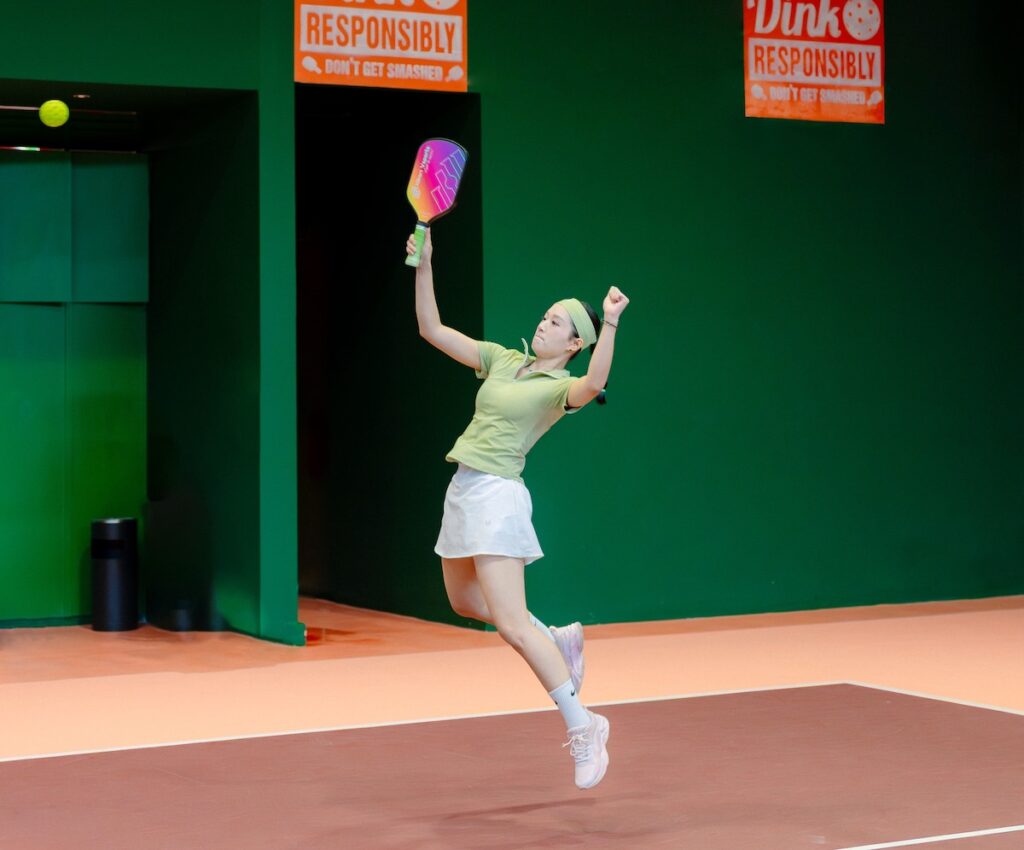
Noise should be considered early when pickleball courts are planned near homes, hotels or other noise-sensitive areas. Ball impact, player activity and the number of courts operating at the same time can all affect the surrounding environment.
Site layout, distance from neighbouring properties, court orientation, barriers and other acoustic measures may need to form part of the planning process. This can be particularly important for HOAs, residential developments, hospitality sites and urban facilities.
Addressing acoustics during planning is generally far easier than trying to solve a noise problem after the courts are operating.
Pickleball Court FAQ
How big is a pickleball court?
How much space do you need for a pickleball court?
What surface is used for pickleball courts?
Can a tennis court be converted into pickleball courts?
Can pickleball courts be built indoors?
Can pickleball courts be covered?
How much does it cost to build a pickleball court?
Can you build multiple pickleball courts together?
Can Apex help with a pickleball court project?
Planning a Pickleball Court Project?
Tell us about your site, location and how you plan to use the courts. Whether you are considering a new commercial facility, adding pickleball to an existing venue or reviewing a court conversion, Apex can help you understand the requirements and plan the next step.
You can also see how Apex supports projects from early consultation through coordination and delivery on our process page.