Padel & Pickleball Courts
in Atlanta, Georgia
Planning a padel or pickleball court in Atlanta, Georgia? Apex Padel supplies premium European padel court systems and supports commercial pickleball developments for sports clubs, property developers, hospitality businesses and private clients.Atlanta already has established...
Premium Courts.
Built for Atlanta, Georgia.
Planning a padel or pickleball court in Atlanta, Georgia? Apex Padel supplies premium European padel court systems and supports commercial pickleball developments for sports clubs, property developers, hospitality businesses and private clients.
Atlanta already has established commercial padel facilities and a network of public pickleball courts. A successful new project therefore requires careful consideration of competition, property suitability and the intended customer experience. Zoning, foundations, tree protection, drainage and construction access can also affect development. Apex helps clients evaluate court specifications and coordinate technical requirements with appropriate professionals.
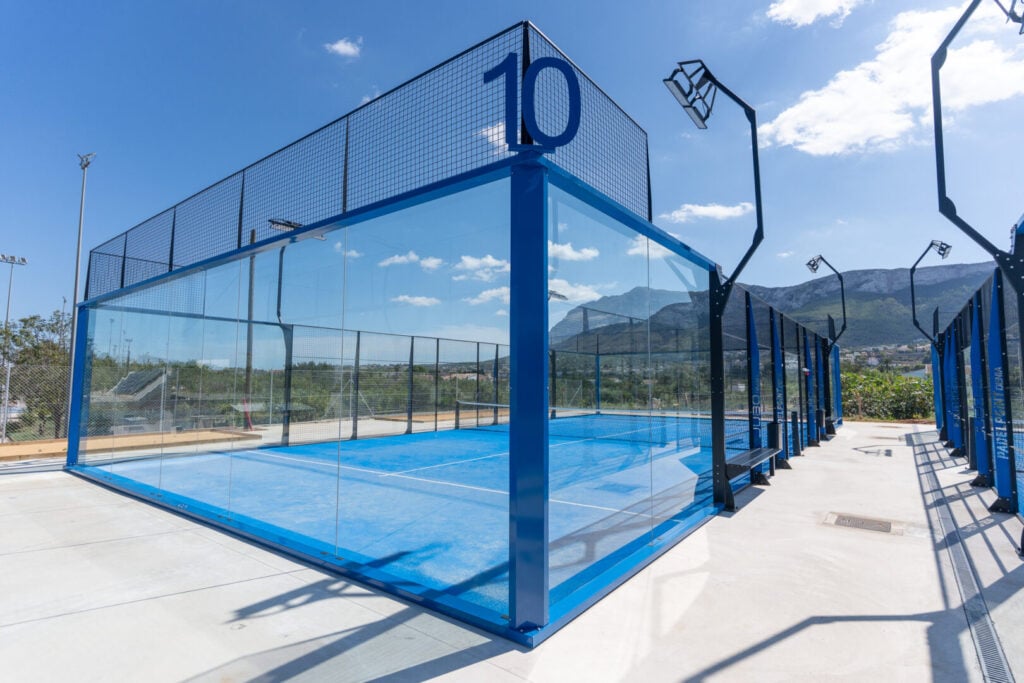
Explore Our Court Systems
Premium courts for commercial and private developments.
Padel & Pickleball in Atlanta, Georgia
Atlanta is Georgia's largest city and a major commercial center in the southeastern United States. The city includes established residential neighborhoods, commercial buildings, hospitality properties and recreational facilities.
Potential court developments may involve dedicated clubs, suitable commercial building conversions, existing tennis facilities or recreational amenities within private developments.
Existing Commercial Padel in Atlanta
Padel Haus operates six covered padel courts at Westside Paper, 950 West Marietta Street NW.
The venue includes stadium-style seating, a center court designed for competitive play, locker rooms, a pro shop, fitness facilities and a café.
Its location in a redeveloped commercial property provides a useful example of incorporating specialist racquet sports into an established urban environment.
For a new commercial operator, this is evidence that padel is already being played in Atlanta. However, the existing venue also represents competition, and demand for additional courts should be assessed independently.
Atlanta's Dedicated Public Pickleball Courts
The City of Atlanta maintains dedicated pickleball courts at several public parks.
Southside Park provides six dedicated courts, while Adams Park has four. Grove Park and South Bend Park each provide two, and A.D. Williams Park includes one dedicated court.
These facilities serve different neighborhoods and demonstrate the existing distribution of outdoor pickleball provision across the city.
Shared Tennis and Pickleball Facilities
The city's official directory also identifies tennis courts marked for pickleball at locations including East Lake Park, Grant Park, Peachtree Hills Park, Maddox Park and Shady Valley Park.
Indoor programming is available at selected recreation centers, including Anderson Recreation Center and Peachtree Hills Recreation Center.
Court availability, reservations and recreational schedules vary. Commercial operators should research the actual playing opportunities near their proposed location.
Different Development Environments
A commercial venue in West Midtown may involve conversion of an existing building, while a private court in Buckhead could face different landscaping, tree-protection and neighboring-property considerations.
Properties near Downtown, Grant Park or other established neighborhoods may also have restricted construction access or historic development controls.
Each site should be assessed individually rather than assuming one court layout will suit the entire city.
Padel Courts in Atlanta, Georgia
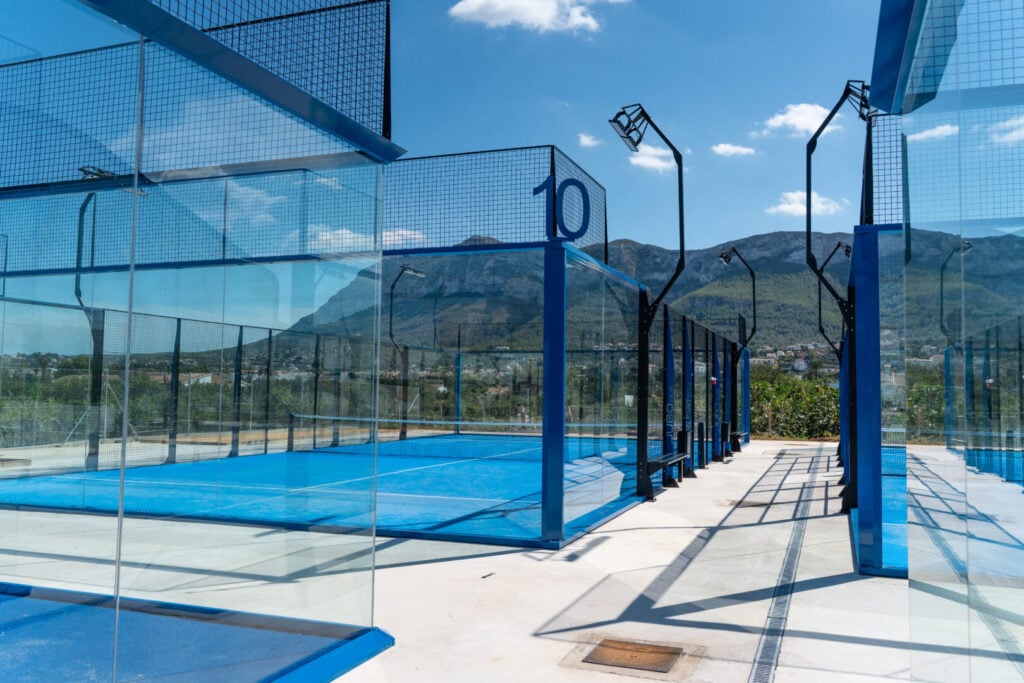
Apex supplies premium European-engineered padel courts for suitable commercial and private developments in Atlanta. Our padel court range includes panoramic, glass, indoor and covered systems.
Commercial Padel Clubs
Atlanta's established padel facilities provide useful examples of how courts can be integrated with coaching, bookings, spectator seating and other amenities.
A proposed club should consider the complete operating model before deciding on equipment or the number of courts.
The playing enclosure requires suitable foundations, structural anchoring, access and surrounding circulation. Commercial facilities also need appropriate customer parking, building services and supporting spaces.
Indoor Padel and Building Conversions
Suitable commercial buildings may offer opportunities for indoor padel where sufficient clear height, appropriate floor construction and installation access exist.
An enclosed padel court includes substantial glass panels and steelwork. Structural columns, ceiling obstructions, loading arrangements and existing services can therefore influence whether a building is suitable.
Indoor facilities may provide greater control over Georgia's summer heat and seasonal thunderstorms, although cooling, ventilation and energy costs should form part of the financial assessment.
Explore our indoor padel court systems for more information.
Outdoor Padel Courts
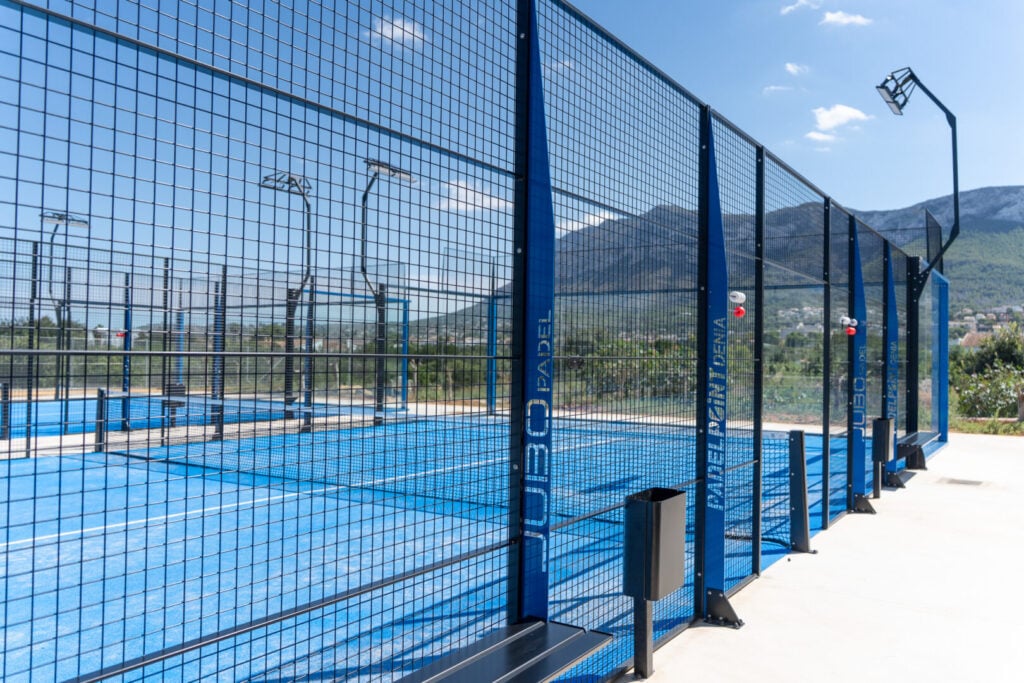
Outdoor installations may suit appropriate racquet clubs, residential communities and private properties where sufficient land and suitably engineered foundations are available.
Atlanta's sloping sites, mature trees and established drainage infrastructure can influence the position of the court.
Foundations should be assessed for the enclosed steel and glass structure rather than assuming an existing hard surface is suitable.
Premium Panoramic Courts
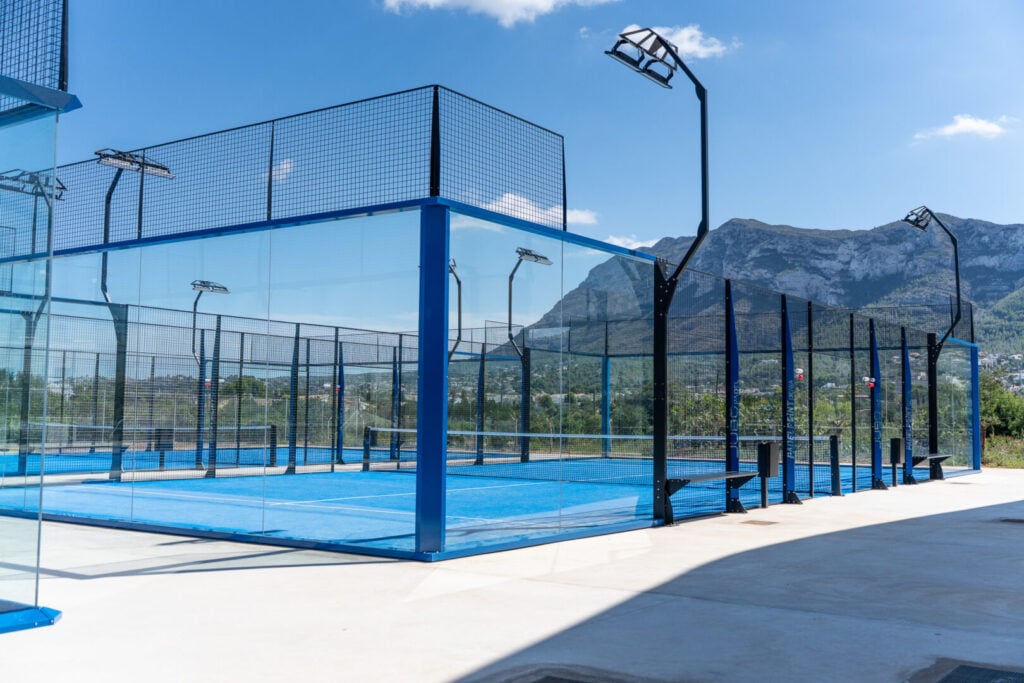
Panoramic padel courts may suit commercial clubs where presentation and spectator visibility are priorities.
The final specification should also reflect the property's structural requirements, installation access and maintenance needs.
Covered Padel Facilities
Covered courts may provide shade and shelter from some rainfall. However, the supporting roof and foundations must be engineered for the site's applicable wind and other structural loads.
A canopy should not be presented as providing safe outdoor play during lightning or severe thunderstorms.
Apex helps coordinate equipment specifications with manufacturers, engineers and appropriate installation professionals. Learn more about our court project process.
Pickleball Courts in Atlanta, Georgia
Atlanta already provides pickleball through dedicated public courts, shared tennis facilities and indoor recreational programs.
Apex supports commercial pickleball court developments, including purpose-built playing surfaces, multi-court facilities and the conversion of suitable existing recreational courts.
Purpose-Built Pickleball Facilities
A regulation pickleball court measures 20 by 44 feet, while approximately 34 by 64 feet is preferred for the complete playing surface in new construction.
Commercial venues also require additional space for circulation, fencing, seating, lighting and supporting amenities.
The proposed number of courts should reflect the expected level of use and the wider business model rather than simply maximizing the marked playing areas.
Learning From Atlanta's Public Courts
Southside Park's six dedicated courts and Adams Park's four courts provide examples of larger public playing areas.
Other locations rely on shared tennis infrastructure, demonstrating different ways to provide pickleball within established recreational properties.
A private commercial venue should investigate current public court availability, reservation arrangements and the potential value of additional services.
Indoor Pickleball Opportunities
Atlanta's recreation centers already offer indoor playing sessions, while suitable commercial buildings may provide opportunities for dedicated indoor courts.
An indoor venue can offer greater control over heat, rainfall and booking schedules, but building suitability, cooling, ventilation, lighting and acoustics must be assessed.
Commercial operators should compare the cost of a building conversion against the benefits of more consistent playing conditions.
Converting Existing Tennis Courts
Some existing tennis or multi-sport courts may be suitable for pickleball conversion where their dimensions, foundations, surface condition and drainage are appropriate.
The City of Atlanta lists several public tennis courts with permanent pickleball markings and also prohibits unauthorized permanent line painting on city tennis courts.
For private conversions, the property owner should assess the condition of the playing surface and any applicable approvals before making permanent changes.
Noise and Urban Neighbors
Pickleball produces distinctive impact sounds that can be noticeable near homes and other occupied buildings.
Outdoor facilities in established Atlanta neighborhoods should be planned around court placement, operating hours, lighting and potential acoustic mitigation.
Indoor venues may also need treatment to manage reverberation and sound transmission into neighboring commercial spaces.
Commercial Competition
Atlanta already has commercial padel and public pickleball facilities. A new developer should research the intended catchment area, customer preferences, existing courts and competing services.
Padel and pickleball require different equipment and playing formats, so the potential demand for each should be assessed separately.
Our Court Options
Several court configurations may suit Atlanta developments, depending on the proposed property and intended use.
- Indoor padel courts: Worth considering for suitable commercial building conversions and dedicated sports venues.
- Panoramic padel courts: Suitable for premium clubs and hospitality properties where court visibility and appearance are priorities.
- Glass padel courts: An option for appropriately engineered commercial and private facilities.
- Covered padel courts: May provide additional shade and weather protection where a suitable engineered structure can be accommodated.
Choosing a Court for an Urban Property
A commercial building conversion may have limited ceiling clearance or restricted delivery access. An outdoor residential project may instead be affected by tree protection, setbacks and drainage.
The final equipment specification should follow a full assessment of the property rather than a standard recommendation for Atlanta.
Local Construction Requirements
Atlanta's Tree Protection Requirements
Atlanta has established tree-protection regulations that can influence the development of outdoor courts.
Effective June 25, 2025, the city introduced a requirement for applicants proposing work with potential impacts on trees to complete a formal Arborist Meeting before submitting the relevant permit application.
The Office of Buildings states that qualifying applications without documentation of the meeting will not be accepted.
This can be particularly relevant to private courts on wooded properties or commercial developments requiring tree removal, grading or construction access through established landscaping.
Tree Protection and Court Layout
A property may appear to contain sufficient space for a court but have protected trees or root areas that restrict excavation and foundations.
The usable development area should be established before deciding on court dimensions, access routes or equipment specifications.
Qualified professionals should identify whether tree surveys, protection plans or additional approvals are necessary.
Sloping Ground and Foundation Preparation
Atlanta's topography includes hills, valleys and sites with significant changes in elevation.
Providing a level playing area may require excavation, retaining structures or additional geotechnical investigation.
Changes to existing ground levels can also influence runoff and the stability of neighboring land.
Heavy Rainfall and Urban Drainage
Atlanta experiences thunderstorms capable of producing intense rainfall. Outdoor courts introduce additional hard surfacing and can change how water moves across the property.
Suitable drainage should be planned alongside foundations and surrounding ground levels.
Projects near existing stormwater infrastructure or watercourses may require additional municipal engineering review.
Streams and Floodplain Considerations
Some Atlanta properties are located near Peachtree Creek, Proctor Creek and other drainage corridors.
Protected stream buffers, flood hazards or existing drainage easements may restrict the available construction area.
Property owners should check official mapping and applicable development regulations before clearing vegetation or preparing foundations.
Commercial Zoning and Site Development
Atlanta's Department of City Planning administers zoning and development procedures, while its Office of Buildings manages relevant permit applications and inspections.
Commercial court operators should establish whether the intended recreational use is permitted at the property and whether zoning relief, site-plan review or other approvals are necessary.
Existing commercial or industrial zoning should not automatically be treated as approval for a public racquet sports facility.
Accela Permitting
The City of Atlanta provides online permitting services through Accela Citizen Access.
Depending on the development, applications may involve grading, building alterations, structural drawings, electrical work, occupancy and other supporting documentation.
Early consultation is useful where a proposed court requires tree removal, a change of building use or substantial site alterations.
Updated Georgia Building Codes
Atlanta's published construction-code guidance identifies the transition to Georgia's updated state building codes during 2026.
For new permit applications from February 1, 2026, Atlanta requires compliance with the newly adopted state codes.
Indoor sports conversions, court structures and covered facilities should be assessed against the applicable building, fire, structural and accessibility requirements.
Construction Stormwater Requirements
Qualifying projects involving substantial land disturbance may require local erosion-control approvals and Georgia EPD construction stormwater permit coverage.
These requirements can apply to the wider project, including foundations, parking and associated infrastructure, rather than only the playing surface.
Summer Heat and Thunderstorms
Atlanta experiences hot summers and frequent thunderstorms. Outdoor facilities should consider shade, drinking-water access, suitable operating hours and procedures for suspending play during lightning.
Covered courts can reduce sun exposure but are not a substitute for appropriate severe-weather safety procedures.
Planning a Court in Atlanta, Georgia?
Tell us about your site and the type of court you are considering. Our team can help you explore the options.
Types of Court Projects
Padel and pickleball courts can complement several types of Atlanta development.
- Commercial padel clubs: Dedicated venues for bookings, memberships, coaching and competitive events.
- Existing sports facilities: Additional racquet sports or suitable adaptations of current playing areas.
- Commercial building conversions: Indoor courts where clear height, structural capacity and permitted use allow.
- Residential communities: Shared facilities planned around access, noise, lighting and maintenance.
- Private properties: Individual courts where sufficient space and relevant approvals are available.
- Hotels and hospitality developments: Premium recreational amenities integrated into appropriate properties.
- Commercial property developers: Multi-court facilities with supporting parking, circulation and customer amenities.
Developing a Commercial Club
Atlanta's existing padel facilities demonstrate a commercial model incorporating courts, coaching and supporting amenities.
A new operator should evaluate whether its proposed venue provides a distinctive location, playing environment or customer experience.
Existing Property Conversions
Large commercial buildings can offer potential opportunities for indoor facilities, but a conversion requires detailed assessment of structural capacity, access, occupancy and building services.
A suitable building may reduce the amount of new site construction while introducing different costs associated with cooling, ventilation and alterations.
Private Court Development
Private properties may place greater emphasis on landscaping, privacy and maintaining the character of the surrounding site.
Tree protection and nearby properties should be considered before selecting the court position.
Explore our padel court projects for examples of different installation environments.
Planning Your Court Project
Before developing a padel or pickleball court in Atlanta, the proposed property should be assessed for physical suitability and planning requirements.
Initial Project Planning Checklist
- Available space: Confirm playing dimensions, access and supporting amenities.
- Zoning: Establish whether the proposed recreational use is permitted.
- Tree protection: Check whether a formal Arborist Meeting and tree-related approvals are required.
- Ground conditions: Assess slopes, existing pavement, foundations and retaining work.
- Drainage: Review runoff, protected streams and any mapped flood hazards.
- Indoor buildings: Check clear height, floor support, cooling, ventilation and occupancy.
- Structural engineering: Confirm applicable loads for enclosures and covered courts.
- Noise and lighting: Consider neighboring properties and operating hours.
- Construction access: Plan deliveries and installation equipment around existing buildings.
- Permits: Establish zoning, building, grading and other relevant approvals.
Coordinating Court Supply
Apex helps clients compare court systems and coordinate technical requirements with manufacturers, engineers and appropriate installation professionals.
For Atlanta developments, early investigation of building suitability, tree protection and land use can help avoid selecting equipment before the project is confirmed as feasible.
Learn more about our project process.
Padel & Pickleball Court Costs
The cost of installing padel or pickleball courts in Atlanta depends on the selected equipment, property conditions and wider construction requirements.
Main Cost Considerations
- Court equipment: Different padel structures and pickleball surfaces involve different equipment costs.
- Existing building conversions: Floor improvements, cooling, ventilation and structural alterations may be necessary.
- Tree protection: Arborist reviews, preservation measures or changes to the layout can influence development costs.
- Ground preparation: Grading, retaining structures, foundations and drainage vary between sites.
- Planning approvals: Zoning, permitting and professional documentation can affect the project.
- Covered structures: Roof engineering and supporting foundations introduce additional expenses.
- Noise and lighting: Some locations may require acoustic treatment or specialist lighting.
- Supporting amenities: Parking, reception, player circulation and changing facilities should be included.
- Installation logistics: Restricted urban sites can require additional delivery and handling arrangements.
Our padel court cost guide explains the main pricing factors. For a quotation based on your Atlanta property, contact Apex Padel with details of the proposed site and court numbers.
Areas We Cover
Apex welcomes enquiries throughout Atlanta, including Downtown, Midtown, Buckhead, West Midtown, Westside, Grant Park, Old Fourth Ward, East Atlanta, Virginia-Highland and surrounding neighborhoods.
We can also discuss projects in nearby communities, including Alpharetta, Sandy Springs, Brookhaven, Decatur and other parts of metropolitan Atlanta.
Different municipalities may administer separate zoning and building procedures. For statewide information, visit our Georgia court supply and installation page.
Frequently Asked Questions
Planning padel and pickleball courts in Atlanta, Georgia.
Does Atlanta already have commercial padel courts?
Yes. Padel Haus operates six covered padel courts at Westside Paper in Atlanta, alongside spectator seating and supporting club amenities. A proposed commercial venue should consider this established competition and investigate customer demand before investing in additional courts.
Where are Atlanta's dedicated public pickleball courts?
The City of Atlanta lists dedicated pickleball courts at Southside Park, Adams Park, Grove Park, South Bend Park and A.D. Williams Park. The city also provides shared tennis and pickleball facilities and indoor recreation programs. Availability and reservations vary by location.
Do private court developments in Atlanta need tree-protection approval?
They may. Atlanta requires a formal Arborist Meeting before submitting permit applications involving potential tree impacts. This requirement was introduced in June 2025 and can be relevant to outdoor courts needing grading, excavation or tree removal. Property owners should establish any applicable tree-protection and permitting requirements before construction begins.
Can Apex Padel coordinate court projects in Atlanta?
Apex supplies premium European padel court systems and supports commercial pickleball project planning. We help clients evaluate specifications and coordinate with manufacturers and appropriate technical and installation professionals. Project arrangements depend on the proposed property and its construction requirements.
Explore More Locations
Ready to Start Your Padel Project?
Premium court systems, clear guidance and support from initial enquiry through to project delivery.
Get a Quote