Padel & Pickleball Courts
in Michigan
Considering a new padel or pickleball court in Michigan? Apex Padel supplies premium European-engineered padel systems and supports commercial pickleball projects for racquet clubs, developers, hospitality venues and suitable private properties. We help compare court...
Premium Courts.
Built for Michigan.
Considering a new padel or pickleball court in Michigan? Apex Padel supplies premium European-engineered padel systems and supports commercial pickleball projects for racquet clubs, developers, hospitality venues and suitable private properties. We help compare court structures, identify site-specific construction questions and coordinate technical details with manufacturers, engineers and appropriate installation professionals.
Court planning here should reflect local playing opportunities as well as construction realities. Great Lakes and rivers; Snow loads; Freeze/thaw, wetlands, ground movement. From initial feasibility through equipment selection, the goal is a practical, professionally specified facility rather than a standard design applied without regard to its site.
Explore Our Court Systems
Premium courts for commercial and private developments.
Padel & Pickleball in Michigan
Michigan has a varied racquet-sports landscape: municipal recreation centres, tennis conversions, independent commercial facilities and residential amenity projects can serve different audiences. A state-wide search is useful at the research stage, but any proposal must be tested against the catchment and approvals for its exact location.
Local playing and development context
The available research points to established facilities and different operating models across Michigan. Public courts can be a strong participation indicator, while their fees, reservation rules and opening hours should not be assumed to translate directly into demand for another private club.
Michigan EGLE requires Part 91 soil-erosion permits for earth change disturbing one or more acres or generally within 500 feet of a lake or stream. Source.
Permit-by-rule construction stormwater coverage varies for 1–5 acres and 5+ acres. Source.
The five featured city markets
A sports project in one Michigan city may face very different property costs, weather exposure or competition from another. These individual guides cover local court opportunities and construction issues:
- Detroit — local recreation and development conditions
- Grand Rapids — Grand Rapids has a growing mix of park, club and shared recreational court opportunities; identify current venues with local parks authority.
- Ann Arbor — Ann Arbor Parks lists pickleball at Allmendinger, Burns, Leslie, South Maple, Sylvan and Veterans Memorial parks.
- Lansing — Lansing has municipal parks and organized recreation serving its state-capital community; current pickleball venue configurations require local verification.
- Traverse City — Traverse City lists tennis and pickleball at Slabtown Corner.
Research demand locally
Published court inventories should be checked for dedicated versus shared-use layouts, league allocations and indoor seasonality. Compare the intended customer base, travel time, court-booking experience and supporting amenities before committing to a commercial property.
Padel Courts in Michigan
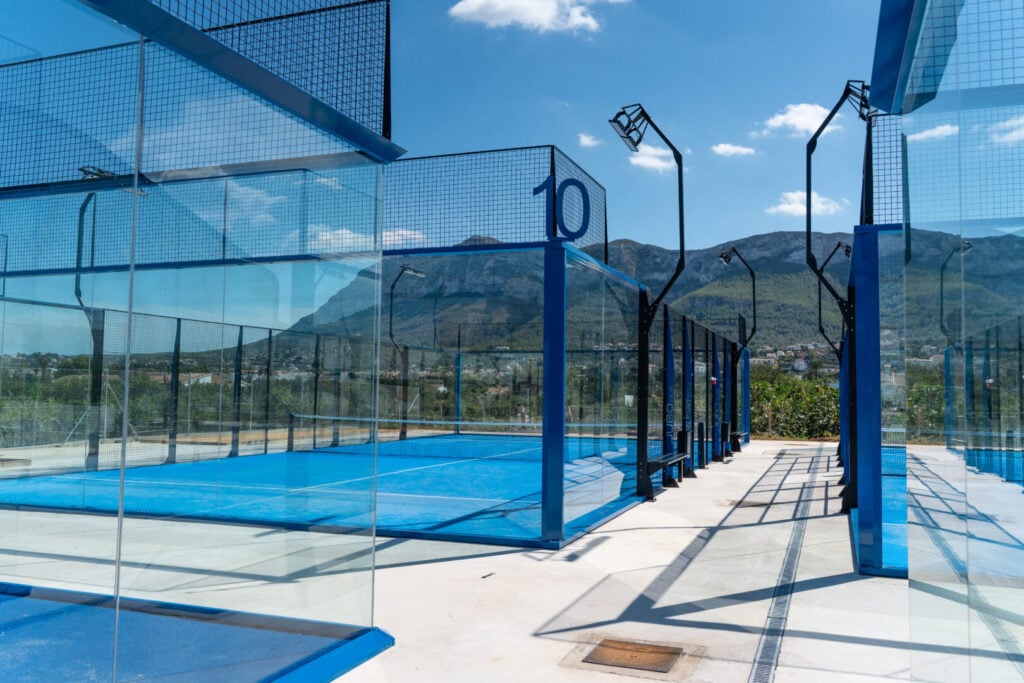
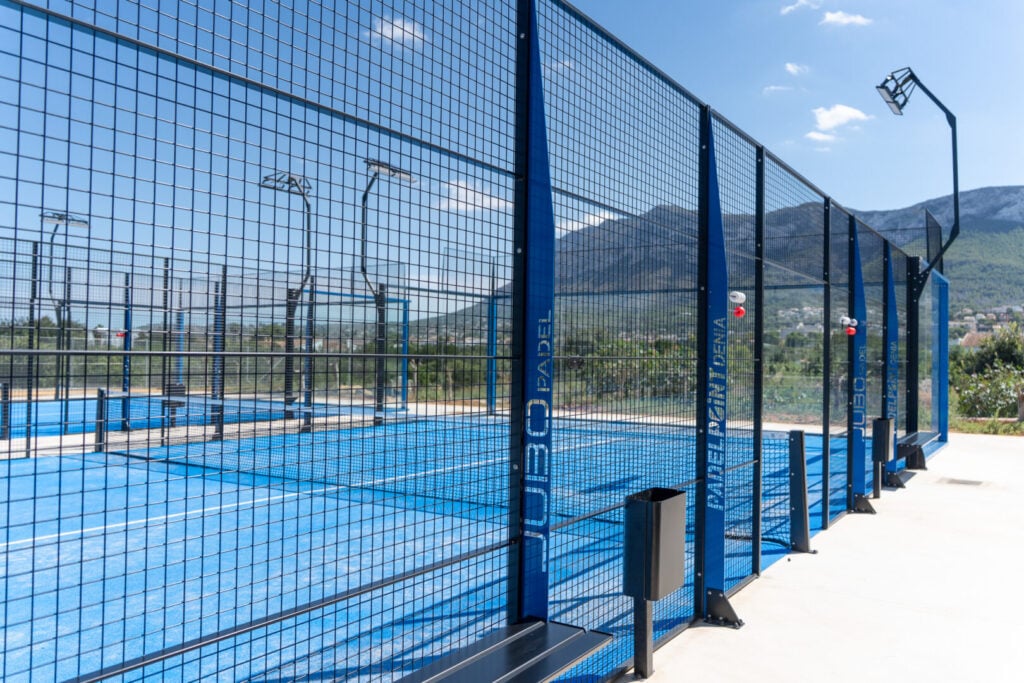
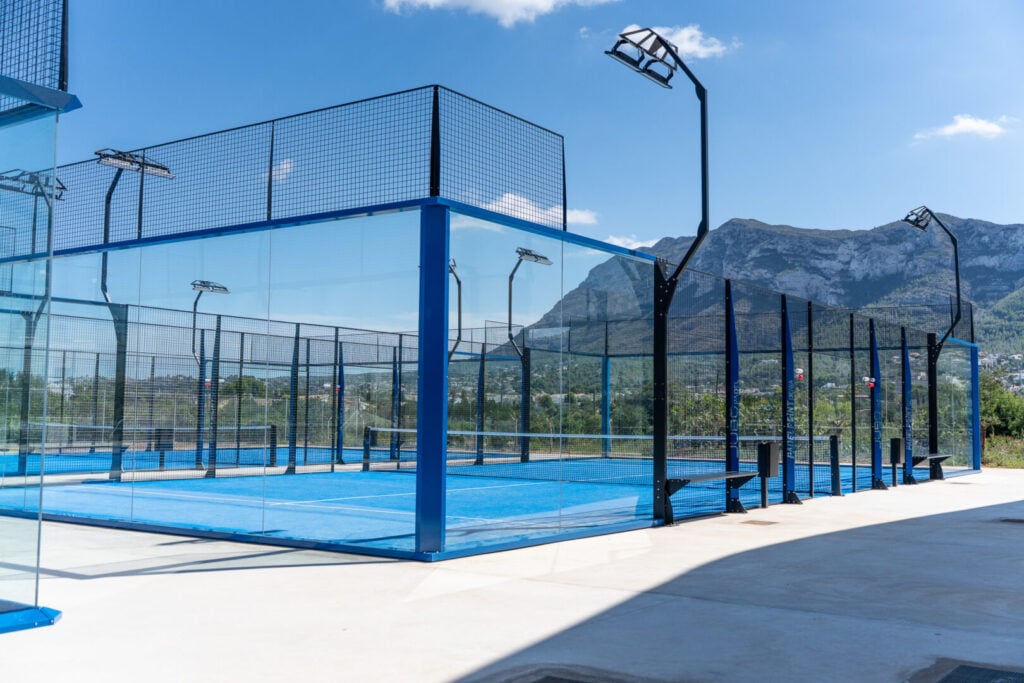
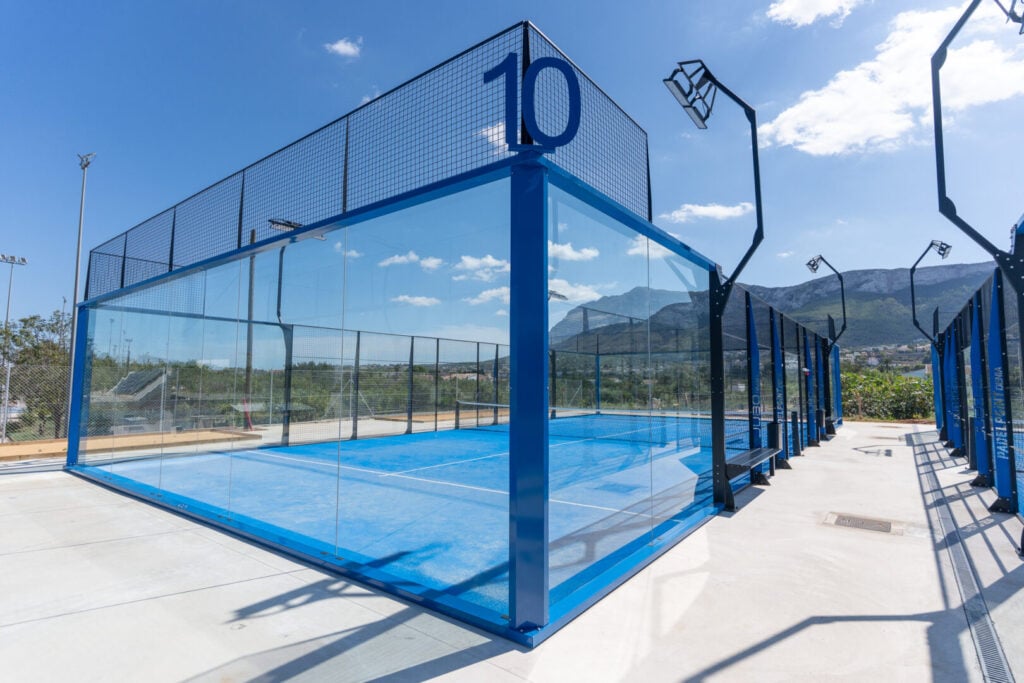
A padel court is not simply a painted rectangle. Its steel enclosure, tempered glass, playing surface, lighting and supporting foundations form a linked structural system. Apex offers European padel court systems for developers considering professionally engineered installations in Michigan.
Indoor padel and existing buildings
An indoor conversion can improve booking consistency where weather makes outdoor play less reliable. However, clear height, column spacing, slab capacity, ventilation, energy costs, fire safety and accessible circulation must all work for the intended recreational occupancy. For this area, winter temperatures and snow make the building envelope and dependable heating particularly important. See indoor padel courts.
Outdoor enclosures and structural loading
Glass panels and frames create substantial forces at anchors and footings. Design should establish wind loads, bearing capacity, frost or moisture concerns and the condition of existing concrete before a system is ordered. Even a sheltered site needs a structural review rather than reliance on assumptions from another installation.
Commercial positioning in Michigan
A dedicated club can build a programme around court hire, coaching, events and membership; an existing tennis centre may instead use padel to broaden its racquet offer. Those concepts require different changing, reception, spectator and parking arrangements. Look at competing public and commercial court options separately for padel and for pickleball.
Premium and covered specifications
Panoramic courts can support visibility and presentation where these influence the user experience. Covered court systems may add shade or precipitation protection, but the roof introduces further wind, uplift and snow-load engineering. A canopy is not equivalent to an insulated building.
Private courts and site practicality
Private installations require sufficient clearances, safe access for glass delivery, suitable foundations and realistic provision for lighting, maintenance and neighboring properties. The apparent availability of land is only a first step; applicable zoning or association restrictions must also be reviewed.
Apex can support equipment selection and technical coordination; site works and installation arrangements should be confirmed with suitable professionals. Explore our project process for the stages of a court development.
Pickleball Courts in Michigan
Michigan is part of an expanding national pickleball landscape, but the useful local question is how much playable time is actually available. Dedicated municipal courts, tennis overlays and indoor gyms offer different levels of access. A commercial project should map them separately before estimating demand.
Existing courts and playing options
City and county recreational directories are the best place to confirm currently open courts, reservation restrictions and programme schedules. Review the locality's published information.
Correct dimensions and circulation
A regulation pickleball court is 20 by 44 feet. For new construction, approximately 34 by 64 feet is preferred for the complete playing area; a commercial layout also needs safe walkways, separation between courts, fencing, seating and accessible routes. These additional spaces matter when evaluating a seemingly large enough parcel.
Public courts versus commercial clubs
Municipal parks commonly provide open play, while indoor clubs can build a different offer through advance reservations, coaching, leagues, events and more predictable year-round conditions. These differences influence revenue projections. Where public courts have large capacity, do not treat observed participation as evidence that those players will pay for another venue.
Converting existing tennis or hard courts
A suitable tennis surface may accept pickleball markings, nets and fencing changes, but its pavement condition, drainage, run-off, subbase and overall geometry still need examination. Court lines should never be the only basis for budgeting a permanent facility.
Neighborhood impacts and seasonality
A winter indoor option may materially extend playing hours compared with unheated outdoor courts. Repetitive paddle sounds can also be intrusive near houses, apartments or offices. Positioning, landscaping, playing hours and acoustic advice should be considered before plans are finalized.
Apex supports commercial pickleball court projects with equipment and planning guidance, while actual design choices should reflect local court competition and site approval requirements.
Our Court Options
The right product depends on how a project is intended to operate and what the site can support. Michigan clients may wish to compare the following systems during early feasibility:
- Indoor padel: suitable where a compliant building is available and the operator values year-round environmental control.
- Panoramic padel: an option where club presentation, coaching visibility and spectator experience matter.
- Glass padel systems: professionally engineered enclosures with careful attention to ground anchors and panel protection.
- High-wind padel: a specification to evaluate on more exposed sites once the design wind loads are known.
- Covered padel: shelter that must still be designed for local snow, wind and foundations.
- Pickleball solutions: suitable court preparation and surface planning for single or multi-court projects.
A court model for the project
Do not choose solely on appearance. The site engineer should assess ground bearing, drainage, loads, erection access and the building or site approval route. Indoor and outdoor specifications can produce very different capital costs and booking economics.
For Michigan, early comparisons should also consider Great Lakes and rivers; Snow loads; Freeze/thaw, wetlands, ground movement. Product recommendations are starting points for an engineered proposal, not statements that a particular design is approved for every property.
Local Construction Requirements
Michigan construction must follow the responsible city or county authority as well as any applicable state and federal requirements. For the researched jurisdiction, the relevant initial contact is Michigan EGLE and local Part 91 agency. It is important to distinguish an environmental discharge permit from a building permit, zoning consent or civil engineering approval; one does not substitute for the others.
Environmental permits and disturbed ground
The published state construction programme provides the first check: Michigan EGLE requires Part 91 soil-erosion permits for earth change disturbing one or more acres or generally within 500 feet of a lake or stream.. Review the state guidance. A project disturbing less than the usual state acreage threshold may still be regulated by a municipal grading rule, protected waterway or its inclusion in a larger common plan. Confirm the total area of paving, excavation, access and auxiliary buildings.
Additional local requirements
Michigan EGLE requires Part 91 soil-erosion permits for earth change disturbing one or more acres or generally within 500 feet of a lake or stream.. Permit-by-rule construction stormwater coverage varies for 1–5 acres and 5+ acres..
Drainage, flood zones and easements
The parcel should be checked against official flood maps, drainage plans, stream buffers, utility easements and any protected wetlands. New hard surfaces can change runoff even where the playing area is small. Nearby river, stream or lake catchments make flood elevation and downstream discharge checks especially relevant.
Foundations and soils
A professional ground assessment may be necessary where fill, clay movement, rock, slope or variable moisture is suspected. The padel frame and its glass panels need structural footings and anchors; tennis or pickleball surfacing needs a stable, well-drained base. Existing concrete should not be assumed fit for a new enclosed court.
Wind, roof and seasonal loads
Even sheltered projects require load checks. Snow accumulation, frost depth and freeze-thaw performance can affect both roof design and pavement life. Any canopy, light mast or rooftop installation needs its own structural checks.
Existing-building conversion
A warehouse or former commercial venue can look promising while failing on clear height, fire egress, floor loading, ventilation, parking or the legal change of use. Establish these factors before negotiating a long lease or placing the equipment order.
Construction approvals change over time, and published summaries cannot replace a permit review for the actual address. A suitably licensed local professional should confirm the applicable code edition and required documentation.
Planning a Court in Michigan?
Tell us about your site and the type of court you are considering. Our team can help you explore the options.
Types of Court Projects
Several project formats may suit Michigan, but each calls for different investment, operations and permissions:
- Dedicated padel clubs: professionally enclosed courts with a bookings, membership or coaching programme.
- Indoor commercial racquet facilities: suitable existing structures providing climate-controlled playing options.
- Existing tennis clubs: added padel or appropriate pickleball conversions after pavement and foundations are assessed.
- Residential developments: shared sports amenities planned around noise, circulation, management and access.
- Hotels and mixed-use destinations: courts integrated with hospitality, staffing and other guest services.
- Private installations: appropriately permitted single courts with safe delivery access and a maintenance plan.
The best format depends on where its customers come from and how the site would be run. In Michigan, evaluating Great Lakes and rivers; Snow loads; Freeze/thaw, wetlands, ground movement early reduces the risk of selecting a property that is attractive commercially but costly to develop.
Planning Your Court Project
A practical Michigan project plan should bring technical feasibility and the business case together before court systems are finalized. Apex can help explore court specifications and coordinate manufacturer requirements with suitably qualified project professionals.
Step 1: Establish the site
Measure usable area and clearances; identify overhead obstructions, utilities, vehicle access, accessible routes, water drainage and neighboring uses. For existing buildings, measure true clear height beneath services rather than floor-to-roof dimensions.
Step 2: Check the local approval route
Contact Michigan EGLE and local Part 91 agency about zoning, site plans, permits and any limits on hours, lighting or land disturbance. Review state stormwater requirements separately and confirm whether a larger phased project changes the threshold.
Step 3: Match equipment to operating model
Select the likely number of courts using evidence on customer groups, membership targets, public alternatives, coaching provision and achievable booking utilization. Compare indoor, open outdoor and covered systems based on the complete cost of operating them.
Step 4: Engineer the build
Agree subgrade and drainage specifications, structural loads, anchors, lighting and clearances. The ground conditions and site drainage remain critical. Snow and frost should be included in winter construction planning.
Step 5: Confirm delivery and aftercare
Plan glass unloading, crane or forklift access if needed, electrical work, commissioning, maintenance and customer handover. See our project process and review completed project examples to understand different facility formats.
Padel & Pickleball Court Costs
There is no meaningful all-in Michigan court price without knowing the site. Court equipment is only one part of the finished project; civil works, professional design and the intended business facilities can change the investment substantially.
Equipment and foundations
Enclosed padel frames, glazing, playing turf and accessories vary by model. Subgrade, foundations, ground bearing and drainage can represent a major additional cost, particularly where the property contains fill, rock, slopes or poor existing pavement.
Weather protection and building works
Indoor heating, cooling, ventilation and legal occupancy upgrades may add materially to a conversion. A canopy introduces roof and support engineering. In a cold location, annual energy consumption and snow management should be modeled rather than ignored.
Approvals, utilities and surrounding amenities
Factor in site-plan work, erosion controls, stormwater treatment, fencing, lighting, accessible paths, parking, toilets and spectator space. Acoustic analysis may be appropriate near housing. Specialist engineers and licensed contractors should be engaged for the relevant design and construction tasks.
Build a realistic estimate
A sensible early budget distinguishes equipment supply, transport, site works, installation, contingency and ongoing operations. Our padel court cost guide explains general cost drivers; contact Apex Padel with the property, number of courts and intended indoor or outdoor configuration for an initial discussion.
Areas We Cover
Apex welcomes project enquiries across Michigan, including Detroit, Grand Rapids, Ann Arbor, Lansing, Traverse City. The appropriate structure, building-code authority and installation arrangements depend on the exact city or county where the property lies.
Please provide a site address, whether the project is commercial or private, the expected number of courts, available dimensions and any existing drawings. Early information helps determine which equipment and professional checks will be relevant before a formal proposal.
Frequently Asked Questions
Planning padel and pickleball courts in Michigan.
Where are padel and pickleball facilities found in Michigan?
Our Michigan guides include Detroit, Grand Rapids, Ann Arbor, Lansing, Traverse City. Permit-by-rule construction stormwater coverage varies for 1–5 acres and 5+ acres.. Public and commercial courts vary in access and opening hours, so confirm the current information with each operator before using it to assess a new venue.
Are indoor padel courts worth considering in Michigan?
They may be where the property has sufficient clear height, appropriate foundations and legal recreational occupancy. Winter cold, snow and frost can limit outdoor bookings. Indoor projects require budgeting for ventilation, temperature control, lighting and ongoing building operation.
What permits are needed for court construction in Michigan?
The first step is to check permitted use, building requirements and drainage with Michigan EGLE and local Part 91 agency. The state stormwater programme also applies to qualifying land disturbance: Michigan EGLE requires Part 91 soil-erosion permits for earth change disturbing one or more acres or generally within 500 feet of a lake or stream.. Additional local requirements may apply even when a project is below a common state permit threshold. Confirm everything for the exact parcel.
Can Apex supply and coordinate padel courts for Michigan?
Apex supplies premium European padel systems and helps evaluate court specifications for suitable developments. We support coordination with manufacturers, engineers and appropriate installation professionals, with site works, delivery arrangements and local permits established for each individual project.
Explore More Locations
Ready to Start Your Padel Project?
Premium court systems, clear guidance and support from initial enquiry through to project delivery.
Get a Quote