Padel & Pickleball Courts
in Indiana
Planning a padel or pickleball court in Indiana? Apex Padel supplies premium European padel court systems and supports commercial pickleball developments throughout the state. We help sports clubs, property developers, residential communities and private clients...
Premium Courts.
Built for Indiana.
Planning a padel or pickleball court in Indiana? Apex Padel supplies premium European padel court systems and supports commercial pickleball developments throughout the state. We help sports clubs, property developers, residential communities and private clients evaluate equipment, understand construction considerations and coordinate suitable projects with manufacturers and appropriate technical and installation professionals.
Indiana offers different environments for racquet sports development, from commercial properties in Indianapolis and established residential communities around Carmel and Fishers to regional sports facilities in Fort Wayne and Bloomington. Winter weather, ground conditions, drainage and local zoning should influence each installation. Apex helps clients identify suitable court specifications rather than assuming one solution is appropriate statewide.
Explore Our Court Systems
Premium courts for commercial and private developments.
Padel & Pickleball in Indiana
Indiana combines major metropolitan areas, suburban residential communities, regional commercial centers and university towns. These locations offer different possibilities for dedicated racquet sports clubs, existing facility conversions and recreational amenities.
Indianapolis and the surrounding Hamilton County communities provide an established market for pickleball, while Fort Wayne has extensive municipal and commercial playing facilities. Bloomington also has dedicated public courts and recreational programs.
Indianapolis Recreation
Indy Parks operates pickleball at Broad Ripple Park and several other recreational facilities. Broad Ripple Park offers outdoor courts and indoor playing opportunities through its Family Center.
The department's 2026 capital program includes completed pickleball improvements at Southside Park and Tolin-Akeman Park, demonstrating continued investment in public playing facilities.
Indianapolis Pickleball Club also operates several private venues in the wider metropolitan area, providing a commercial playing alternative to public parks.
Carmel and Fishers
Carmel Clay Parks & Recreation operates pickleball at Meadowlark Park, Lawrence W. Inlow Park and Monon Community Center.
Fishers Parks provides eight courts at Cyntheanne Park and five at Holland Park. Its Community Center, opened in November 2025, includes a large multi-purpose sports area configurable for up to nine pickleball courts.
These facilities demonstrate substantial recreational provision north of Indianapolis. They also form part of the competition that a proposed commercial club should research.
Fort Wayne's Court Network
Fort Wayne Parks and Recreation lists 36 outdoor and six indoor pickleball courts within its recreational system.
The wider Fort Wayne area includes dedicated commercial facilities such as Power Courts, which provides 21 indoor pickleball courts.
New operators should investigate the availability, location and services of these existing venues before committing to additional courts.
Bloomington's Recreational Facilities
Bloomington Parks and Recreation operates six pickleball courts at RCA Community Park and additional playing opportunities at Switchyard Park and other facilities.
Indoor recreation is also available through local sports centers. Bloomington's university setting and established residential neighborhoods may offer different audiences, but demand for a commercial racquet sports venue should be researched independently.
Different Construction Conditions
A commercial building conversion in Indianapolis may be constrained by clear height and occupancy, while a residential court in Carmel may require additional consideration of drainage, landscaping and neighboring homes.
Fort Wayne's rivers and Bloomington's limestone and karst landscapes create further location-specific considerations. The actual site should determine the construction approach.
Padel Courts in Indiana
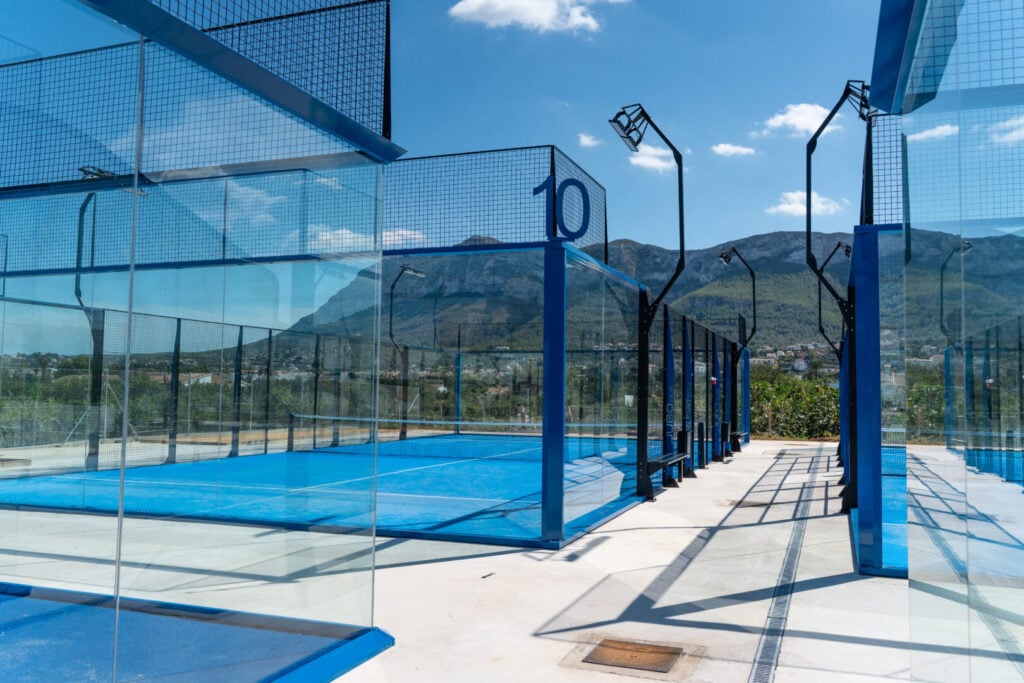
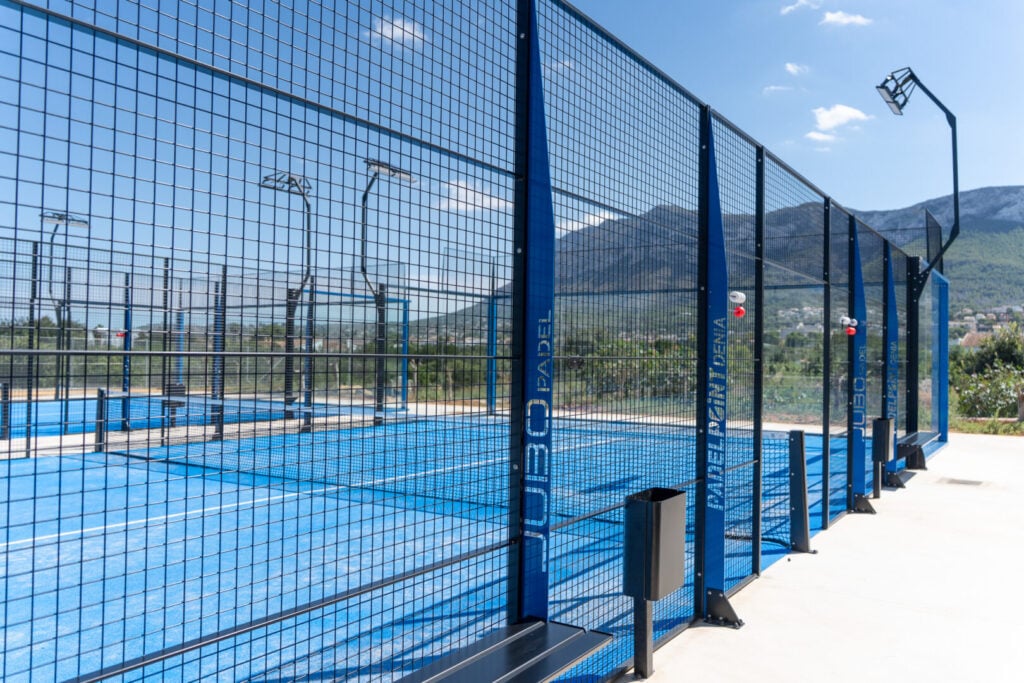
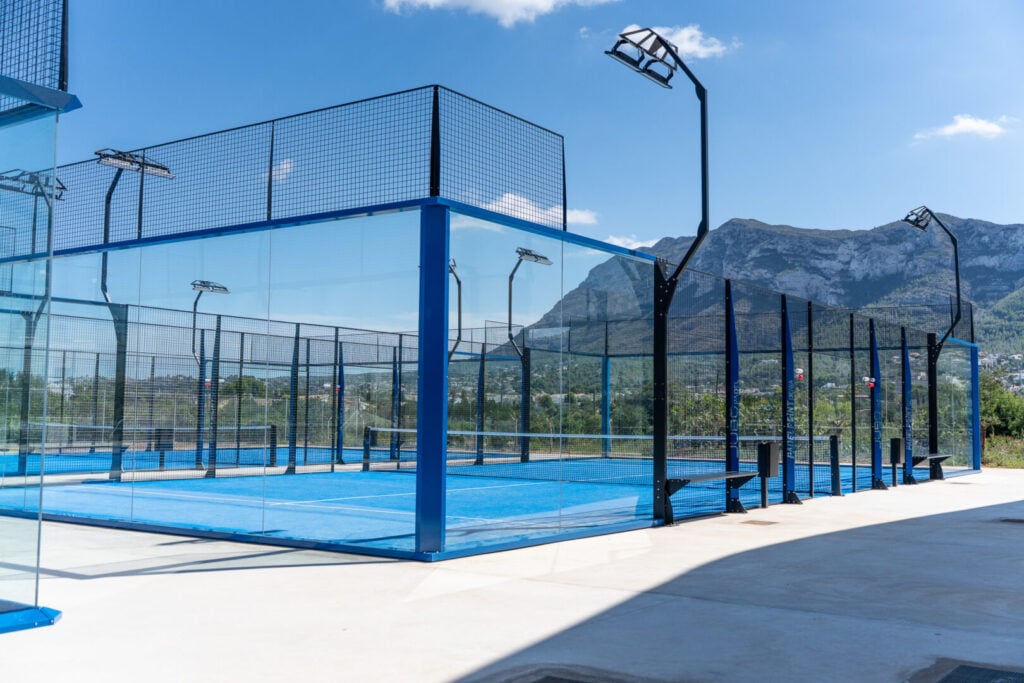
Apex supplies premium European-engineered padel courts for suitable commercial and private developments throughout Indiana. Our padel court range includes panoramic, glass, indoor and covered systems.
Commercial Padel Clubs
Padel may provide a complementary racquet sport at an existing tennis club or form part of a dedicated commercial venue.
Unlike an open pickleball court, padel requires a specialist enclosure incorporating steel framework, glass panels and structural anchoring. Foundations should be designed for the complete structure and its applicable loads.
Commercial operators should also consider bookings, coaching, spectator space, player circulation, parking and supporting amenities before selecting court numbers.
Indoor Padel in Indiana
Indoor padel may be particularly relevant for operators seeking consistent playing conditions through Indiana's freezing winters and seasonal storms.
Suitable existing sports buildings and commercial properties can offer conversion opportunities where sufficient clear height, appropriate floors and access for large court components exist.
Heating, ventilation, cooling, lighting, accessibility and the proposed recreational occupancy should be considered alongside equipment costs.
Explore our indoor padel court systems for further information.
Outdoor Padel Facilities
Outdoor padel may suit appropriate clubs, private properties and residential developments where sufficient land and suitably engineered foundations are available.
Indiana experiences freezing temperatures, snowfall, heavy rain and thunderstorms. Court foundations and playing surfaces should be designed around site-specific soils, frost protection and drainage.
An existing tennis court or paved area should not automatically be assumed suitable for the structural loads of a padel enclosure.
Premium Panoramic Systems
Panoramic padel courts may suit commercial venues and premium private developments where court appearance and spectator visibility are important.
The selected system should also reflect structural engineering, maintenance access and the intended playing environment.
Covered Court Options
Covered padel courts can provide additional shelter from rain and direct sunlight, but their roof structures must be engineered for applicable wind and snow loads.
Snow accumulation, drifting and roof geometry can influence design. A canopy does not provide the same environmental control as an insulated and heated sports building.
Private Court Development
Private padel courts may be suitable where the property provides sufficient space, appropriate foundations and relevant approvals.
Landscaping, drainage, access, lighting and neighboring homes should influence the court position.
Apex helps coordinate specifications with manufacturers, engineers and appropriate installation professionals. Learn more about our court project process.
Pickleball Courts in Indiana
Indiana already has substantial public and commercial pickleball provision, including dedicated outdoor courts, indoor clubs and multi-purpose community facilities.
Apex supports commercial pickleball court projects, including purpose-built courts, multi-court facilities and suitable conversions of existing recreational surfaces.
Purpose-Built Pickleball Courts
A regulation pickleball court measures 20 by 44 feet, while approximately 34 by 64 feet is preferred for the complete playing surface in new construction.
Commercial facilities also require space for safe circulation, fencing, seating, lighting, accessibility and supporting amenities.
The proposed number of courts should reflect available land, expected bookings and the wider operating model.
Existing Municipal Facilities
Indianapolis, Carmel, Fishers, Fort Wayne and Bloomington already provide public pickleball through parks and recreational centers.
The operating arrangements vary. Some facilities offer dedicated outdoor courts, while others provide indoor sessions using flexible gymnasium space.
A private venue should research these facilities before deciding whether additional court availability or specialist services would be commercially valuable.
Indoor Commercial Pickleball
Fort Wayne's Power Courts and the Indianapolis Pickleball Club demonstrate established commercial participation in Indiana.
Indoor courts may provide greater booking consistency through winter, but suitable buildings require adequate flooring, lighting, ventilation, heating and appropriate approvals.
Operators should evaluate construction and long-term operating costs as well as expected revenue.
Multi-Purpose Sports Buildings
Fishers Community Center can accommodate up to nine pickleball courts within a multi-purpose sports area.
Such configurations demonstrate how existing recreational buildings can support several sports, although shared scheduling differs from a dedicated commercial club.
Existing Tennis Court Conversions
Some tennis courts may be suitable for pickleball conversion where the existing dimensions, foundations, surface condition and drainage allow.
Permanent conversions can involve resurfacing, new markings, dedicated nets and changes to fencing or circulation.
An existing playing surface should be assessed for cracking, settlement and frost-related damage before work begins.
Winter and Summer Conditions
Outdoor facilities need suitable maintenance for snow, ice, rainfall and summer heat.
Shade, drinking-water access, sports lighting and appropriate operating hours can improve the practicality of outdoor play.
Indoor facilities can offer greater environmental control, although their energy consumption should be considered.
Noise and Residential Compatibility
Pickleball produces distinctive impact sounds that may be important near homes and other occupied properties.
Court orientation, distance to neighbors, operating hours and possible acoustic measures should be considered early.
Commercial Market Assessment
Existing public facilities demonstrate organized participation but do not guarantee demand for another paid venue.
Padel and pickleball also have different playing formats and infrastructure requirements. Potential demand for each should be evaluated independently.
Our Court Options
Several court systems may suit developments throughout Indiana.
- Indoor padel courts: Particularly relevant for commercial facilities seeking more predictable playing conditions during winter.
- Panoramic padel courts: Suitable for premium clubs and private developments where visibility and presentation are priorities.
- Glass padel courts: An option for professionally engineered commercial and private facilities.
- Covered padel courts: May provide additional weather protection where the supporting structure meets applicable wind and snow requirements.
Matching the System to the Property
A large commercial building may offer possibilities for indoor courts, but structural columns, floor conditions and occupancy restrictions can reduce the usable space.
An outdoor property may instead require extensive drainage, foundation preparation or environmental review.
The final specification should follow the site assessment rather than a standard statewide recommendation.
Local Construction Requirements
Indiana's Current Building Codes
The Indiana Department of Homeland Security identifies the 2014 Indiana Building Code as the current commercial building-code framework. It is based on the 2012 International Building Code with Indiana amendments.
The state also uses the 2020 Indiana Residential Code for applicable residential construction, based on the 2018 International Residential Code with amendments.
New commercial sports facilities, covered structures and indoor building conversions should be reviewed against the codes applicable to their construction and occupancy.
State Construction Design Release
Certain commercial and public-use construction projects require a Construction Design Release from the Indiana Department of Homeland Security before local permits can be issued.
The applicability depends on the proposed structure, occupancy and relevant exemptions.
Applicants should establish whether state plan review is required before committing to a construction schedule. Local building permits may still be necessary.
Winter Frost Protection
Indiana experiences freezing temperatures and seasonal changes in soil moisture.
Outdoor court foundations and paved playing surfaces should be designed to manage frost-related movement, surface drainage and applicable structural loads.
Foundation requirements depend on the site and the supporting structure rather than a single construction depth for every property.
Snow and Wind Engineering
Padel enclosures and covered courts require assessment of applicable snow, wind and other environmental loads.
The steel framework, glass panels, anchors, foundations and any roof should be considered as a complete structural system.
Covered structures should also account for snow drifting and maintenance access where relevant.
Indiana Construction Stormwater General Permit
The Indiana Department of Environmental Management administers the Construction Stormwater General Permit, which replaced the former Rule 5 program in December 2021.
Coverage generally applies to construction disturbing one acre or more and qualifying smaller projects that form part of a larger common plan of development or sale.
Applicants should establish the required Construction and Stormwater Pollution Prevention Plan, Notice of Intent and erosion-control measures before land disturbance begins.
Local Stormwater Requirements
Indiana municipalities and local stormwater authorities also administer development and drainage procedures.
Indiana legislation effective May 1, 2025, limits local construction stormwater regulations that are more stringent than the state's Construction Stormwater General Permit.
Other applicable drainage, utility, floodplain and engineering requirements still need to be established for the actual project.
Floodplain and Floodway Construction
Properties near rivers, streams, reservoirs or lakes may be affected by mapped flood hazards.
Development within regulated floodways can require a permit from the Indiana Department of Natural Resources as well as appropriate local approvals.
Qualifying work can include excavation, grading, filling and construction, not only occupied buildings.
The responsible authorities should determine which requirements apply to the proposed court and its supporting infrastructure.
Indianapolis and Hamilton County Waterways
The White River and its tributaries affect parts of central Indiana, including Indianapolis, Carmel and Fishers.
Severe flooding in Carmel during August 2026 provides a recent example of why site-specific flood exposure and erosion should be investigated where relevant.
That event should not be interpreted as meaning every property in the region is flood-prone.
Fort Wayne's Rivers
Fort Wayne is situated around the St. Marys, St. Joseph and Maumee rivers.
Some properties may require additional floodplain, drainage or ground-condition assessment before construction.
Bloomington's Karst Geology
The Bloomington and Monroe County area contains limestone and karst features, including sinkholes and subsurface drainage systems.
Properties with mapped or suspected karst features may require conservation easements, ground investigation or changes to the proposed drainage design.
These conditions vary by property and should not be assumed to affect every Bloomington development.
Municipal and County Zoning
Indiana cities and counties administer different land-use, development and building permit processes.
Some public pickleball facilities are operated by independent parks organizations rather than the municipal departments responsible for private construction permits.
Developers should confirm the property's planning jurisdiction and permitted recreational use before selecting equipment or beginning site preparation.
Planning a Court in Indiana?
Tell us about your site and the type of court you are considering. Our team can help you explore the options.
Types of Court Projects
Padel and pickleball courts can complement several types of development across Indiana.
- Commercial racquet clubs: Dedicated facilities for memberships, bookings, coaching and organized play.
- Existing tennis facilities: Additional padel courts or suitable pickleball conversions.
- Indoor commercial buildings: Sports venues where sufficient space, structural capacity and approvals allow.
- Residential communities: Shared courts planned around maintenance, noise, lighting and access.
- Private properties: Individual installations where sufficient land and relevant permissions are available.
- Hotels and hospitality properties: Recreational amenities integrated into suitable developments.
- Regional sports centers: Multi-court facilities with appropriate parking, circulation and supporting infrastructure.
Different Regional Opportunities
The Indianapolis metropolitan area contains extensive public and commercial pickleball infrastructure. Fort Wayne has a substantial indoor commercial venue, while Bloomington offers a different university-area recreational market.
A new facility should be evaluated around its actual catchment, competitors and intended customers rather than statewide participation alone.
Indoor Versus Outdoor Investment
Indoor facilities can offer greater scheduling consistency but require suitable buildings and ongoing heating, ventilation and maintenance.
Outdoor courts may have different capital requirements but need appropriate foundations, drainage and seasonal maintenance.
Explore our padel court projects for examples of different installations.
Planning Your Court Project
Before investing in an Indiana padel or pickleball development, the proposed property should be assessed for its physical suitability and approval requirements.
Initial Project Planning Checklist
- Available space: Confirm court dimensions, player clearances and supporting facilities.
- Zoning: Establish whether the intended recreational use is permitted.
- State plan review: Determine whether an Indiana Construction Design Release is required.
- Foundations: Assess soils, frost protection and structural anchoring.
- Drainage: Review runoff and the effect of additional hard surfaces.
- Flood risk: Check official mapping and floodway requirements where relevant.
- Wind and snow: Establish the applicable design loads for enclosures and covered structures.
- Indoor buildings: Assess clear height, flooring, heating, ventilation and occupancy.
- Environmental constraints: Investigate karst, waterways or unstable ground where applicable.
- Noise and lighting: Consider neighboring homes and operating hours.
- Approvals: Confirm planning, building, drainage and construction stormwater requirements.
Coordinating Court Supply
Apex helps clients evaluate suitable systems and coordinate technical requirements with manufacturers, engineers and appropriate installation professionals.
Early assessment allows foundations, building suitability and drainage to be considered together before equipment is ordered.
Learn more about our court project process.
Padel & Pickleball Court Costs
The cost of installing padel or pickleball courts in Indiana depends on the equipment, property conditions and wider construction requirements.
Main Cost Considerations
- Court equipment: Different padel systems and pickleball surfaces have different specifications and prices.
- Foundations: Excavation, ground preparation, frost protection and anchoring influence construction costs.
- Indoor conversions: Building alterations, heating, ventilation and occupancy requirements can affect the budget.
- Covered structures: Snow and wind engineering introduce additional construction requirements.
- Drainage: New paving may require stormwater controls or infrastructure improvements.
- Site constraints: Floodplain conditions, erosion or karst geology may require specialist investigation.
- Noise and lighting: Sensitive sites may need acoustic assessment or specialist sports lighting.
- Supporting facilities: Parking, fencing, reception, seating and accessibility should be included.
- Professional services: State and local permits, engineering, delivery and installation form part of the complete investment.
Our padel court cost guide explains the main pricing considerations. For a quotation tailored to your Indiana development, contact Apex Padel with the proposed location and number of courts.
Areas We Cover
Apex welcomes initial padel and pickleball court enquiries throughout Indiana, including Indianapolis, Carmel, Fishers, Fort Wayne and Bloomington.
We can also discuss suitable developments elsewhere in central Indiana, northeastern Indiana, southern Indiana and surrounding mainland communities.
Each project requires individual assessment of planning jurisdiction, engineering, equipment delivery and installation arrangements. Our city pages provide more detailed information about local court facilities and development conditions.
Contact Apex to discuss your proposed site and suitable court specifications.
Frequently Asked Questions
Planning padel and pickleball courts in Indiana.
Does Indiana already have commercial indoor pickleball facilities?
Yes. Indianapolis Pickleball Club operates commercial playing facilities in the Indianapolis area, while Power Courts in Fort Wayne provides 21 dedicated indoor courts. These venues demonstrate established commercial participation, but new operators should assess local competition and demand before investing.
Are indoor padel courts suitable for Indiana's climate?
Indoor padel can offer more predictable playing conditions through winter freezing, snowfall and periods of heavy rain. Suitable buildings need adequate clear height, structural support, heating, ventilation and access. The financial benefits should be considered alongside construction and operating costs.
What permits may be required for court construction in Indiana?
Requirements depend on the property and proposed work. They may include zoning approval, local building permits, an Indiana Construction Design Release, drainage review and floodway authorization. The state's Construction Stormwater General Permit generally applies to qualifying construction disturbing one acre or more, including smaller projects within larger common developments.
Can Apex Padel coordinate projects throughout Indiana?
Apex supplies premium European padel court systems and supports commercial pickleball project planning. We help clients evaluate suitable equipment and coordinate with manufacturers and appropriate technical and installation professionals. Delivery and installation arrangements are established individually for each project.
Explore More Locations
Ready to Start Your Padel Project?
Premium court systems, clear guidance and support from initial enquiry through to project delivery.
Get a Quote